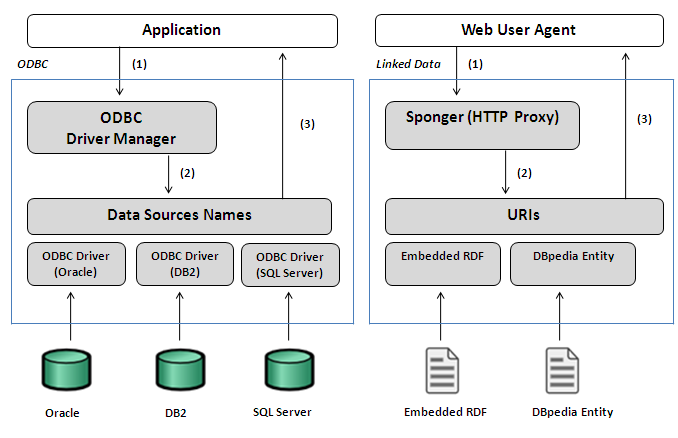
<?xml version="1.0" encoding="UTF-8" ?>
<!--RDF based XML document generated By OpenLink Virtuoso-->
<rdf:RDF xmlns:rdf="http://www.w3.org/1999/02/22-rdf-syntax-ns#">
 <rss:channel xmlns:rss="http://purl.org/rss/1.0/" rdf:about="http://www.openlinksw.com:443/blog/kidehen@openlinksw.com/blog/">
  <rss:title>Kingsley Idehen&#39;s Blog Data Space</rss:title>
  <rss:link>http://www.openlinksw.com:443/blog/kidehen@openlinksw.com/blog/</rss:link>
  <rss:description>I have seen the future and it&#39;s full of Linked Data! :-)</rss:description>
  <dc:creator xmlns:dc="http://purl.org/dc/elements/1.1/">kidehen@openlinksw.com</dc:creator>
  <dc:date xmlns:dc="http://purl.org/dc/elements/1.1/">2026-04-22T22:35:15Z</dc:date>
  <rss:items>
   <rdf:Seq>
      <rdf:li rdf:resource="http://www.openlinksw.com:443/blog/kidehen@openlinksw.com/blog/?date=2010-02-17#1608" />
      <rdf:li rdf:resource="http://www.openlinksw.com:443/blog/kidehen@openlinksw.com/blog/?date=2010-01-31#1590" />
      <rdf:li rdf:resource="http://www.openlinksw.com:443/blog/kidehen@openlinksw.com/blog/?date=2009-01-08#1514" />
      <rdf:li rdf:resource="http://www.openlinksw.com:443/blog/kidehen@openlinksw.com/blog/?date=2008-08-27#1424" />
      <rdf:li rdf:resource="http://www.openlinksw.com:443/blog/kidehen@openlinksw.com/blog/?date=2008-04-10#1334" />
      <rdf:li rdf:resource="http://www.openlinksw.com:443/blog/kidehen@openlinksw.com/blog/?date=2008-01-17#1300" />
      <rdf:li rdf:resource="http://www.openlinksw.com:443/blog/kidehen@openlinksw.com/blog/?date=2006-10-20#1065" />
      <rdf:li rdf:resource="http://www.openlinksw.com:443/blog/kidehen@openlinksw.com/blog/?date=2006-09-26#1050" />
      <rdf:li rdf:resource="http://www.openlinksw.com:443/blog/kidehen@openlinksw.com/blog/?date=2006-05-05#968" />
      <rdf:li rdf:resource="http://www.openlinksw.com:443/blog/kidehen@openlinksw.com/blog/?date=2004-03-23#483" />
      <rdf:li rdf:resource="http://www.openlinksw.com:443/blog/kidehen@openlinksw.com/blog/?date=2003-06-26#192" />
      <rdf:li rdf:resource="http://www.openlinksw.com:443/blog/kidehen@openlinksw.com/blog/?date=2003-06-26#191" />
      <rdf:li rdf:resource="http://www.openlinksw.com:443/blog/kidehen@openlinksw.com/blog/?date=2003-06-17#279" />
      <rdf:li rdf:resource="http://www.openlinksw.com:443/blog/kidehen@openlinksw.com/blog/?date=2003-06-09#266" />
   </rdf:Seq>
  </rss:items>
 </rss:channel>
 <rss:item xmlns:rss="http://purl.org/rss/1.0/" rdf:about="http://www.openlinksw.com:443/blog/kidehen@openlinksw.com/blog/?date=2010-02-17#1608">
  <rss:title>Re-introducing the Virtuoso Virtual Database Engine </rss:title>
  <dc:date xmlns:dc="http://purl.org/dc/elements/1.1/">2010-02-17T21:38:01Z</dc:date>
  <dc:description xmlns:dc="http://purl.org/dc/elements/1.1/">In recent times a lot of the commentary and focus re. Virtuoso has centered on the RDF Quad Store and Linked Data. What sometimes gets overlooked is the sophisticated Virtual Database Engine that provides the foundation for all of Virtuoso&#39;s data integration capabilities. In this post I provide a brief re-introduction to this essential aspect of Virtuoso. What is it? This component of Virtuoso is known as the Virtual Database Engine (VDBMS). It provides transparent high-performance and secure access to disparate data sources that are external to Virtuoso. It enables federated access and integration of data hosted by any ODBC- or JDBC-accessible RDBMS, RDF Store, XML database, or Document (Free Text)-oriented Content Management System. In addition, it facilitates integration with Web Services (SOAP-based SOA RPCs or REST-fully accessible Web Resources). Why is it important? In the most basic sense, you shouldn&#39;t need to upgrade your existing database engine version simply because your current DBMS and Data Access Driver combo isn&#39;t compatible with ODBC-compliant desktop tools such as Microsoft Access, Crystal Reports, BusinessObjects, Impromptu, or other of ODBC, JDBC, ADO.NET, or OLE DB-compliant applications. Simply place Virtuoso in front of your so-called &quot;legacy database,&quot; and let it deliver the compliance levels sought by these tools In addition, it&#39;s important to note that today&#39;s enterprise, through application evolution, company mergers, or acquisitions, is often faced with disparately-structured data residing in any number of line-of-business-oriented data silos. Compounding the problem is the exponential growth of user-generated data via new social media-oriented collaboration tools and platforms. For companies to cost-effectively harness the opportunities accorded by the increasing intersection between line-of-business applications and social media, virtualization of data silos must be achieved, and this virtualization must be delivered in a manner that doesn&#39;t prohibitively compromise performance or completely undermine security at either the enterprise or personal level. Again, this is what you get by simply installing Virtuoso. How do I use it? The VDBMS may be used in a variety of ways, depending on the data access and integration task at hand. Examples include: Relational Database Federation You can make a single ODBC, JDBC, ADO.NET, OLE DB, or XMLA connection to multiple ODBC- or JDBC-accessible RDBMS data sources, concurrently, with the ability to perform intelligent distributed joins against externally-hosted database tables. For instance, you can join internal human resources data against internal sales and external stock market data, even when the HR team uses Oracle, the Sales team uses Informix, and the Stock Market figures come from Ingres! Conceptual Level Data Access using the RDF Model You can construct RDF Model-based Conceptual Views atop Relational Data Sources. This is about generating HTTP-based Entity-Attribute-Value (E-A-V) graphs using data culled &quot;on the fly&quot; from native or external data sources (Relational Tables/Views, XML-based Web Services, or User Defined Types). You can also derive RDF Model-based Conceptual Views from Web Resource transformations &quot;on the fly&quot; -- the Virtuoso Sponger (RDFizing middleware component) enables you to generate RDF Model Linked Data via a RESTful Web Service or within the process pipeline of the SPARQL query engine (i.e., you simply use the URL of a Web Resource in the FROM clause of a SPARQL query). It&#39;s important to note that Views take the form of HTTP links that serve as both Data Source Names and Data Source Addresses. This enables you to query and explore relationships across entities (i.e., People, Places, and other Real World Things) via HTTP clients (e.g., Web Browsers) or directly via SPARQL Query Language constructs transmitted over HTTP. Conceptual Level Data Access using ADO.NET Entity Frameworks As an alternative to RDF, Virtuoso can expose ADO.NET Entity Frameworks-based Conceptual Views over Relational Data Sources. It achieves this by generating Entity Relationship graphs via its native ADO.NET Provider, exposing all externally attached ODBC- and JDBC-accessible data sources. In addition, the ADO.NET Provider supports direct access to Virtuoso&#39;s native RDF database engine, eliminating the need for resource intensive Entity Frameworks model transformations. Related Attaching ODBC or JDBC accessible Relational Tables to Virtuoso Using an HTML based Wizard to Generate RDF based Linked Views over Relational Tables Screencast Demonstrating Wizard based generation of RDF based Linked Data Views Part 1 Screencast Demonstrating Wizard based generation of RDF based Linked Data Views Part 1 Generating RDF based Linked Data from non RDF based Web Resources via the Sponger Building ADO.NET based Entity Frameworks Views over Relational Data Building Silverlight Rich Internat Applicaitons using ADO.NET, Entity Frameworks, and RDF based Linked Data.</dc:description>
  <content:encoded xmlns:content="http://purl.org/rss/1.0/modules/content/"><![CDATA[<p>In recent times a lot of the commentary and focus re. <a href="http://virtuoso.openlinksw.com" id="link-id16a22f48">Virtuoso</a> has centered on the RDF Quad Store and <a href="http://dbpedia.org/resource/Linked_Data" id="link-id112d82a0">Linked Data</a>. What sometimes gets overlooked is the sophisticated <a href="http://dbpedia.org/resource/Virtual_Database" id="link-id6493cc8">Virtual Database</a> Engine that provides the foundation for all of Virtuoso&#39;s <a href="http://dbpedia.org/resource/Data">data</a> integration capabilities.</p>

<p>In this post I provide a brief re-introduction to this essential aspect of Virtuoso.</p>

<h3>What is it?</h3>

<p>This component of Virtuoso is known as the Virtual Database Engine (VDBMS). It provides transparent high-performance and secure access to disparate data sources that are external to Virtuoso. It enables federated access and integration of data hosted by any <a href="http://dbpedia.org/resource/Open_Database_Connectivity" id="link-id13c26008">ODBC</a>- or <a href="http://dbpedia.org/resource/Java_Database_Connectivity" id="link-id166604c0">JDBC</a>-accessible <a href="http://dbpedia.org/resource/Relational_database_management_system" id="link-id139dfdb8">RDBMS</a>, RDF Store, XML database, or Document (Free Text)-oriented Content Management System. In addition, it facilitates integration with <a href="http://dbpedia.org/resource/World_Wide_Web">Web</a> Services (SOAP-based SOA RPCs or REST-fully accessible Web Resources). </p>

<h3>Why is it important?</h3>

<p>In the most basic sense, you shouldn&#39;t need to upgrade your existing database engine version simply because your current DBMS and Data Access Driver combo isn&#39;t compatible with ODBC-compliant desktop tools such as Microsoft Access, Crystal Reports, BusinessObjects, Impromptu, or other of ODBC, JDBC, <a href="http://dbpedia.org/resource/ADO.NET" id="link-id13c7ceb8">ADO</a>.NET, or OLE DB-compliant applications. Simply place Virtuoso in front of your so-called &quot;legacy database,&quot; and let it deliver the compliance levels sought by these tools</p>

<p>In addition, it&#39;s important to note that today&#39;s enterprise, through application evolution, company mergers, or acquisitions, is often faced with disparately-structured data residing in any number of line-of-business-oriented data silos. Compounding the problem is the exponential growth of user-generated data via new social media-oriented collaboration tools and platforms. For companies to cost-effectively harness the opportunities accorded by the increasing intersection between line-of-business applications and social media, virtualization of data silos must be achieved, and this virtualization must be delivered in a manner that doesn&#39;t prohibitively compromise performance or completely undermine security at either the enterprise or personal level. Again, this is what you get by simply installing Virtuoso.</p>


<h3>How do I use it?</h3>

<p>The VDBMS may be used in a variety of ways, depending on the data access and integration task at hand. Examples include: </p>

<h4>Relational Database Federation</h4>

<p>You can make a single ODBC, JDBC, ADO.NET, OLE DB, or XMLA connection to multiple ODBC- or JDBC-accessible RDBMS data sources, concurrently, with the ability to perform intelligent distributed joins against externally-hosted database tables.  For instance, you can join internal human resources data against internal sales and external stock market data, even when the HR team uses <a href="http://dbpedia.org/resource/Oracle_Database" id="link-id16706720">Oracle</a>, the Sales team uses <a href="http://dbpedia.org/resource/IBM_Informix" id="link-ide5a15c8">Informix</a>, and the Stock Market figures come from <a href="http://dbpedia.org/resource/Ingres" id="link-id13c0e138">Ingres</a>!</p>

<h4>Conceptual Level Data Access using the RDF Model</h4>

<p>You can construct RDF Model-based Conceptual Views atop Relational Data Sources. This is about generating HTTP-based <a href="http://dbpedia.org/resource/Entity-attribute-value_model" id="link-id115150f8">Entity</a>-Attribute-Value (E-A-V) graphs using data culled &quot;on the fly&quot; from native or external data sources (Relational Tables/Views, XML-based Web Services, or User Defined Types).</p>

<p>You can also derive RDF Model-based Conceptual Views from Web Resource transformations &quot;on the fly&quot; -- the Virtuoso <a href="http://virtuoso.openlinksw.com/Whitepapers/html/VirtSpongerWhitePaper.html" id="link-id1675db50">Sponger</a> (RDFizing middleware component) enables you to generate RDF Model Linked Data via a RESTful Web Service or within the process pipeline of the <a href="http://dbpedia.org/resource/SPARQL" id="link-id166b8d90">SPARQL</a> query engine (i.e., you simply use the <a href="http://dbpedia.org/resource/Uniform_Resource_Locator" id="link-id167d00c8">URL</a> of a Web Resource in the FROM clause of a SPARQL query).</p>

<p>It&#39;s important to note that Views take the form of HTTP links that serve as both Data Source Names and Data Source Addresses. This enables you to query and explore relationships across entities (i.e., People, Places, and other Real World Things) via HTTP clients (e.g., Web Browsers) or directly via SPARQL Query Language constructs transmitted over HTTP.</p>

<h4>Conceptual Level Data Access using ADO.NET <a href="http://dbpedia.org/resource/Entity" id="link-id13c6bb60">Entity</a> <a href="http://dbpedia.org/resource/ADO.NET_Entity_Framework" id="link-id16ad3f68">Frameworks</a>
</h4>

<p>As an alternative to RDF, Virtuoso can expose ADO.NET Entity Frameworks-based Conceptual Views over Relational Data Sources. It achieves this by generating Entity Relationship graphs via its native ADO.NET Provider, exposing all externally attached ODBC- and JDBC-accessible data sources. In addition, the ADO.NET Provider supports direct access to Virtuoso&#39;s native RDF database engine, eliminating the need for resource intensive Entity Frameworks model transformations.</p>

<h3>Related</h3>

<ul>
  <li>
  <a href="http://virtuoso.openlinksw.com/dataspace/dav/wiki/Main/VirtLinkRemoteTables" id="link-id1183acd8">Attaching ODBC or JDBC accessible Relational Tables to Virtuoso</a>
</li>
  <li>
  <a href="http://virtuoso.openlinksw.com/dataspace/dav/wiki/Main/VirtRdb2RDFViewsGeneration#One-Click%20Linked%20Data%20Generation%20&amp;%20Deployment" id="link-id113f2fd8">Using an HTML based Wizard to Generate RDF based Linked Views over Relational Tables</a>
</li>
  <li>
  <a href="http://www.youtube.com/watch?v=bj7AbJ0ZYCk&amp;feature=channel" id="link-id16ad4480">Screencast Demonstrating Wizard based generation of RDF based Linked Data Views Part 1</a>
</li>
  <li>
  <a href="http://www.youtube.com/watch?v=yXNlcISS0aY&amp;feature=channel" id="link-id114eb720">Screencast Demonstrating Wizard based generation of RDF based Linked Data Views Part 1</a>
</li>
  <li>
  <a href="http://virtuoso.openlinksw.com/dataspace/dav/wiki/Main/VirtSponger" id="link-id116e5810">Generating RDF based Linked Data from non RDF based Web Resources via the Sponger</a>
</li>
  <li>
  <a href="http://virtuoso.openlinksw.com/dataspace/dav/wiki/Main/VirtAdoNet35Provider" id="link-id16706118">Building ADO.NET based Entity Frameworks Views over Relational Data</a>
</li>
  <li>
  <a href="http://virtuoso.openlinksw.com/dataspace/dav/wiki/Main/VirtSilverlightSPARQLExample" id="link-id139c1278">Building Silverlight Rich Internat Applicaitons using ADO.NET, Entity Frameworks, and RDF based Linked Data</a>.</li>
</ul>

]]></content:encoded>
 </rss:item>
 <rss:item xmlns:rss="http://purl.org/rss/1.0/" rdf:about="http://www.openlinksw.com:443/blog/kidehen@openlinksw.com/blog/?date=2010-01-31#1590">
  <rss:title>5 Game Changing Things about the OpenLink Virtuoso + AWS Cloud Combo</rss:title>
  <dc:date xmlns:dc="http://purl.org/dc/elements/1.1/">2010-01-31T22:29:34Z</dc:date>
  <dc:description xmlns:dc="http://purl.org/dc/elements/1.1/">Here are 5 powerful benefits you can immediately derive from the combination of Virtuoso and Amazon&#39;s AWS services (specifically the EC2 and EBS components): Acquire your own personal or service specific data space in the Cloud. Think DBase, Paradox, FoxPRO, Access of yore, but with the power of Oracle, Informix, Microsoft SQL Server etc.. using a Conceptual, as opposed to solely Logical, model based DBMS (i.e., a Hybrid DBMS Engine for: SQL, RDF, XML, and Full Text) Ability to share and control access to your resources using innovations like FOAF+SSL, OpenID, and OAuth, all from one place Construction of personal or organization based FOAF profiles in a matter of minutes; by simply creating a basic DBMS (or ODS application layer) account; and then using this profile to create strong links (references) to all your Data silos (esp. those from the Web 2.0 realm) Load data sets from the LOD cloud or Sponge existing Web resources (i.e., on the fly data transformation to RDF model based Linked Data) and then use the combination to build powerful lookup services that enrich the value of URLs (think: Web addressable reports holding query results) that you publish Bind all of the above to a domain that you own (e.g. a .Name domain) so that you have an attribution-friendly &quot;authority&quot; component for resource URLs and Entity URIs published from your Personal Linked Data Space on the Web (or private HTTP network). In a nutshell, the AWS Cloud infrastructure simplifies the process of generating Federated presence on the Internet and/or World Wide Web. Remember, centralized networking models always end up creating data silos, in some context, ultimately! :-)</dc:description>
  <content:encoded xmlns:content="http://purl.org/rss/1.0/modules/content/"><![CDATA[
<p> Here are 5 powerful benefits you can immediately derive from the combination of <a href="http://virtuoso.openlinksw.com" id="link-id17eb8988">Virtuoso</a> and Amazon&#39;s AWS services (specifically the EC2 and EBS components): <br />
</p>  <ol> <li> Acquire your own personal or service specific <a href="http://en.wikipedia.org/wiki/Data_Spaces" id="link-id1423e520">data space</a> in the Cloud. Think DBase, Paradox, FoxPRO, Access of yore, but with the power of <a href="http://dbpedia.org/resource/Oracle_Database" id="link-id136c6290">Oracle</a>, <a href="http://dbpedia.org/resource/IBM_Informix" id="link-id11b269b8">Informix</a>, <a href="http://dbpedia.org/resource/Microsoft_SQL_Server" id="link-id138084b8">Microsoft SQL Server</a> etc.. using a Conceptual, as opposed to solely Logical, model based DBMS (i.e., a Hybrid DBMS Engine for: <a href="http://dbpedia.org/resource/SQL" id="link-id132a7938">SQL</a>, RDF, XML, and Full Text) </li> <li> Ability to share and control access to your resources using innovations like <a href="http://dbpedia.org/resource/Friend_of_a_friend" id="link-id17ee9d28">FOAF</a>+SSL, OpenID, and OAuth, all from one place </li> <li> Construction of personal or organization based FOAF profiles in a matter of minutes; by simply creating a basic DBMS (or <a href="http://dbpedia.org/resource/OpenLink_Data_Spaces" id="link-id14784ae0">ODS</a> application layer) account; and then using this profile to create strong links (references) to all your Data silos (esp. those from the <a href="http://dbpedia.org/resource/World_Wide_Web">Web</a> 2.0 realm) </li> <li> Load data sets from the <a href="http://community.linkeddata.org/dataspace/organization/lod#this" id="link-id17e6ac98">LOD</a> cloud or Sponge existing Web resources (i.e., on the fly data transformation to RDF model based <a href="http://dbpedia.org/resource/Linked_Data" id="link-id17e65d38">Linked Data</a>) and then use the combination to build powerful lookup services that enrich the value of URLs (think: Web addressable reports holding query results) that you publish </li> <li> Bind all of the above to a domain that you own (e.g. a .Name domain) so that you have an attribution-friendly &quot;authority&quot; component for resource URLs and <a href="http://dbpedia.org/resource/Entity" id="link-id118a08d8">Entity</a> URIs published from your Personal Linked Data Space on the Web (or private HTTP network). </li> </ol> <p> In a nutshell, the AWS Cloud infrastructure simplifies the process of generating Federated presence on the <a href="http://dbpedia.org/resource/Internet" id="link-id1380af38">Internet</a> and/or <a href="http://dbpedia.org/resource/World_Wide_Web" id="link-id11633b10">World Wide Web</a>. Remember, centralized networking models always end up creating data silos, in some <a href="http://dbpedia.org/resource/Context_%28language_use%29" id="link-id142006f0">context</a>, ultimately! :-) </p>
]]></content:encoded>
 </rss:item>
 <rss:item xmlns:rss="http://purl.org/rss/1.0/" rdf:about="http://www.openlinksw.com:443/blog/kidehen@openlinksw.com/blog/?date=2009-01-08#1514">
  <rss:title>New ADO.NET 3.x Provider for Virtuoso Released (Update 2)</rss:title>
  <dc:date xmlns:dc="http://purl.org/dc/elements/1.1/">2009-01-08T04:36:47Z</dc:date>
  <dc:description xmlns:dc="http://purl.org/dc/elements/1.1/">I am pleased to announce the immediate availability of the Virtuoso ADO.NET 3.5 data provider for Microsoft&#39;s .NET platform. What is it? A data access driver/provider that provides conceptual entity oriented access to RDBMS data managed by Virtuoso. Naturally, it also uses Virtuoso&#39;s in-built virtual / federated database layer to provide access to ODBC and JDBC accessible RDBMS engines such as: Oracle (7.x to latest), SQL Server (4.2 to latest), Sybase, IBM Informix (5.x to latest), IBM DB2, Ingres (6.x to latest), Progress (7.x to OpenEdge), MySQL, PostgreSQL, Firebird, and others using our ODBC or JDBC bridge drivers. Benefits? Technical: It delivers an Entity-Attribute-Value + Classes &amp; Relationships model over disparate data sources that are materialized as .NET Entity Framework Objects, which are then consumable via ADO.NET Data Object Services, LINQ for Entities, and other ADO.NET data consumers. The provider is fully integrated into Visual Studio 2008 and delivers the same &quot;ease of use&quot; offered by Microsoft&#39;s own SQL Server provider, but across Virtuoso, Oracle, Sybase, DB2, Informix, Ingres, Progress (OpenEdge), MySQL, PostgreSQL, Firebird, and others. The same benefits also apply uniformly to Entity Frameworks compatibility. Bearing in mind that Virtuoso is a multi-model (hybrid) data manager, this also implies that you can use .NET Entity Frameworks against all data managed by Virtuoso. Remember, Virtuoso&#39;s SQL channel is a conduit to Virtuoso&#39;s core; thus, RDF (courtesy of SPASQL as already implemented re. Jena/Sesame/Redland providers), XML, and other data forms stored in Virtuoso also become accessible via .NET&#39;s Entity Frameworks. Strategic: You can choose which entity oriented data access model works best for you: RDF Linked Data &amp; SPARQL or .NET Entity Frameworks &amp; Entity SQL. Either way, Virtuoso delivers a commercial grade, high-performance, secure, and scalable solution. How do I use it? Simply follow one of guides below: Using Visual Studio 2008 &amp; Virtuoso to build an Entity Frameworks based Windows forms application Using Visual Studio 2008 &amp; Virtuoso to build an ADO.NET Data Services based application Note: When working with external or 3rd party databases, simply use the Virtuoso Conductor to link the external data source into Virtuoso. Once linked, the remote tables will simply be treated as though they are native Virtuoso tables leaving the virtual database engine to handle the rest. This is similar to the role the Microsoft JET engine played in the early days of ODBC, so if you&#39;ve ever linked an ODBC data source into Microsoft Access, you are ready to do the same using Virtuoso. Related Entity Oriented Data Access Yoda &amp; the Data FORCE.</dc:description>
  <content:encoded xmlns:content="http://purl.org/rss/1.0/modules/content/"><![CDATA[<p>I am pleased to announce the immediate availability of the <a href="http://virtuoso.openlinksw.com/dataspace/dav/wiki/Main/VirtAdoNet35Provider" id="link-id142e7390">Virtuoso ADO.NET 3.5 data provider</a> for Microsoft&#39;s .NET platform.</p>

<h3>What is it?</h3>
<p>A data access driver/provider that provides conceptual <a href="http://dbpedia.org/resource/Entity" id="link-id11c36c00">entity</a> oriented access to <a href="http://dbpedia.org/resource/Relational_database_management_system" id="link-id12fb8618">RDBMS</a> data managed by Virtuoso. Naturally, it also uses Virtuoso&#39;s in-built virtual / <a href="http://dbpedia.org/resource/federated_database_system" id="link-id115bedc8">federated database</a> layer to provide access to <a href="http://dbpedia.org/resource/Open_Database_Connectivity" id="link-id15153c08">ODBC</a> and <a href="http://dbpedia.org/resource/Java_Database_Connectivity" id="link-id13418908">JDBC</a> accessible RDBMS engines such as: <a href="http://dbpedia.org/resource/Oracle_Database" id="link-id134d72f0">Oracle</a> (7.x to latest), <a href="http://dbpedia.org/resource/SQL" id="link-id15757b88">SQL</a> Server (4.2 to latest), <a href="http://dbpedia.org/resource/Sybase" id="link-id15ef8d48">Sybase</a>, IBM <a href="http://dbpedia.org/resource/IBM_Informix" id="link-id12f56aa0">Informix</a> (5.x to latest), IBM <a href="http://dbpedia.org/resource/IBM_DB2" id="link-id119feb38">DB2</a>, <a href="http://dbpedia.org/resource/Ingres" id="link-id14e3d6c8">Ingres</a> (6.x to latest), Progress (7.x to OpenEdge), <a href="http://dbpedia.org/resource/MySQL" id="link-id11295630">MySQL</a>, PostgreSQL, <a href="http://dbpedia.org/resource/Firebird_database_server" id="link-id12f40448">Firebird</a>, and others using our ODBC or JDBC bridge drivers.</p>

<h3>Benefits?</h3>
<h4>Technical:</h4>
<p>It delivers an <a href="http://dbpedia.org/resource/Entity-attribute-value_model" id="link-id14012040">Entity-Attribute-Value + Classes &amp; Relationships model</a> over disparate data sources that are materialized as .NET Entity Framework Objects, which are then consumable via ADO.NET Data Object Services, LINQ for Entities, and other ADO.NET data consumers.</p> 

<p>The provider is fully integrated into Visual Studio 2008 and delivers the same &quot;ease of use&quot; offered by Microsoft&#39;s own SQL Server provider, but across Virtuoso, Oracle, Sybase, DB2, Informix, Ingres, <a href="http://dbpedia.org/resource/Progress_4GL" id="link-id158d1fe8">Progress (OpenEdge</a>), MySQL, PostgreSQL, Firebird, and others. The same benefits also apply uniformly to Entity Frameworks compatibility.</p>
<p>
Bearing in mind that Virtuoso is a multi-model (hybrid) data manager, this also implies that you can use .NET Entity Frameworks against all data managed by Virtuoso. Remember, Virtuoso&#39;s SQL channel is a conduit to Virtuoso&#39;s core; thus, RDF (courtesy of <a href="http://esw.w3.org/topic/SPASQL" id="link-id133c9b70">SPASQL</a> as already implemented re. <a href="http://virtuoso.openlinksw.com/dataspace/dav/wiki/Main/VirtJenaProvider" id="link-id11380b80">Jena</a>/<a href="http://virtuoso.openlinksw.com/dataspace/dav/wiki/Main/VirtSesame2Provider" id="link-id10fc0c88">Sesame</a>/<a href="http://virtuoso.openlinksw.com/dataspace/dav/wiki/Main/VirtRDFDriverRedland" id="link-id1390f730">Redland</a> providers), XML, and other data forms stored in Virtuoso also become accessible via .NET&#39;s Entity Frameworks.</p>
<br />
<h4>Strategic:</h4>
<p>You can choose which entity oriented data access model works best for you: RDF <a href="http://dbpedia.org/resource/Linked_Data" id="link-id151354f0">Linked Data</a> &amp; <a href="http://dbpedia.org/resource/SPARQL" id="link-id15dc5eb0">SPARQL</a> or .NET Entity Frameworks &amp; <a href="http://en.wikipedia.org/wiki/ADO.NET_Entity_Framework#Entity_SQL" id="link-id14404e80">Entity SQL</a>. Either way, Virtuoso delivers a commercial grade, high-performance, secure, and scalable solution.</p>
<br />
<h3>How do I use it?</h3>

Simply follow one of guides below:
<ul>
<li>
  <a href="http://virtuoso.openlinksw.com/dataspace/dav/wiki/Main/VirtEntityFrameworkSchoolDbWinFormApp" id="link-id15e5c580">Using Visual Studio 2008 &amp; Virtuoso to build an Entity Frameworks based Windows forms application</a>
</li>
<li>
  <a href="http://virtuoso.openlinksw.com/dataspace/dav/wiki/Main/VirtUsingMsAdoNetDataServicesWithVirtuoso" id="link-id157912b0">Using Visual Studio 2008 &amp; Virtuoso to build an ADO.NET Data Services based application</a>
</li>
</ul>

<p>
<b>Note:</b> When working with external or 3rd party databases, simply use the Virtuoso Conductor to link the external data source into Virtuoso. Once linked, the remote tables will simply be treated as though they are native Virtuoso tables leaving the <a href="http://dbpedia.org/resource/Virtual_Database" id="link-id15b04b18">virtual database</a> engine to handle the rest. This is similar to the role the Microsoft JET engine played in the early days of ODBC, so if you&#39;ve ever linked an ODBC data source into Microsoft Access, you are ready to do the same using Virtuoso.</p>

<h3>Related</h3>
<ul>
<li>
  <a href="http://www.openlinksw.com/dataspace/kidehen@openlinksw.com/weblog/kidehen@openlinksw.com%27s%20BLOG%20%5B127%5D/1420" id="link-id160afdd0">Entity Oriented Data Access</a>
</li>
<li>
  <a href="http://www.openlinksw.com/dataspace/kidehen@openlinksw.com/weblog/kidehen@openlinksw.com%27s%20BLOG%20%5B127%5D/1474" id="link-id113eeb50">Yoda &amp; the Data FORCE.</a>
</li>
</ul>
]]></content:encoded>
 </rss:item>
 <rss:item xmlns:rss="http://purl.org/rss/1.0/" rdf:about="http://www.openlinksw.com:443/blog/kidehen@openlinksw.com/blog/?date=2008-08-27#1424">
  <rss:title>Crunchbase &amp; Semantic Web Interview (Remix - Update 1)</rss:title>
  <dc:date xmlns:dc="http://purl.org/dc/elements/1.1/">2008-08-27T18:16:37Z</dc:date>
  <dc:description xmlns:dc="http://purl.org/dc/elements/1.1/">After reading Bengee&#39;s interview with CrunchBase, I decided to knock up a quick interview remix as part of my usual attempt to add to the developing discourse. CrunchBase: When we released the CrunchBase API, you were one of the first developers to step up and quickly released a CrunchBase Sponger Cartridge. Can you explain what a CrunchBase Sponger Cartridge is? Me: A Sponger Cartridge is a data access driver for Web Resources that plugs into our Virtuoso Universal Server (DBMS and Linked Data Web Server combo amongst other things). It uses the internal structure of a resource and/or a web service associated with a resource, to materialize an RDF based Linked Data graph that essentially describes the resource via its properties (Attributes &amp; Relationships). CrunchBase: And what inspired you to create it? Me: Bengee built a new space with your data, and we&#39;ve built a space on the fly from your data which still resides in your domain. Either solution extols the virtues of Linked Data i.e. the ability to explore relationships across data items with high degrees of serendipity (also colloquially known as: following-your-nose pattern in Semantic Web circles). Bengee posted a notice to the Linking Open Data Community&#39;s public mailing list announcing his effort. Bearing in mind the fact that we&#39;ve been using middleware to mesh the realms of Web 2.0 and the Linked Data Web for a while, it was a no-brainer to knock something up based on the conceptual similarities between Wikicompany and CrunchBase. In a sense, a quadrant of orthogonality is what immediately came to mind re. Wikicompany, CrunchBase, Bengee&#39;s RDFization efforts, and ours. Bengee created an RDF based Linked Data warehouse based on the data exposed by your API, which is exposed via the Semantic CrunchBase data space. In our case we&#39;ve taken the &quot;RDFization on the fly&quot; approach which produces a transient Linked Data View of the CrunchBase data exposed by your APIs. Our approach is in line with our world view: all resources on the Web are data sources, and the Linked Data Web is about incorporating HTTP into the naming scheme of these data sources so that the conventional URL based hyperlinking mechanism can be used to access a structured description of a resource, which is then transmitted using a range negotiable representation formats. In addition, based on the fact that we house and publish a lot of Linked Data on the Web (e.g. DBpedia, PingTheSemanticWeb, and others), we&#39;ve also automatically meshed Crunchbase data with related data in DBpedia and Wikicompany data. CrunchBase: Do you know of any apps that are using CrunchBase Cartridge to enhance their functionality? Me: Yes, the OpenLink Data Explorer which provides CrunchBase site visitors with the option to explore the Linked Data in the CrunchBase data space. It also allows them to &quot;Mesh&quot; (rather than &quot;Mash&quot;) CrunchBase data with other Linked Data sources on the Web without writing a single line of code. CrunchBase: You have been immersed in the Semantic Web movement for a while now. How did you first get interested in the Semantic Web? Me: We saw the Semantic Web as a vehicle for standardizing conceptual views of heterogeneous data sources via context lenses (URIs). In 1998 as part of our strategy to expand our business beyond the development and deployment of ODBC, JDBC, and OLE-DB data providers, we decided to build a Virtual Database Engine (see: Virtuoso History), and in doing so we sought a standards based mechanism for the conceptual output of the data virtualization effort. As of the time of the seminal unveiling of the Semantic Web in 1998 we were clear about two things, in relation to the effects of the Web and Internet data management infrastructure inflections: 1) Existing DBMS technology had reached it limits 2) Web Servers would ultimately hit their functional limits. These fundamental realities compelled us to develop Virtuoso with an eye to leveraging the Semantic Web as a vehicle from completing its technical roadmap. CrunchBase: Can you put into laymanâs terms exactly what RDF and SPARQL are and why they are important? Do they only matter for developers or will they extend past developers at some point and be used by website visitors as well? Me: RDF (Resource Description Framework) is a Graph based Data Model that facilitates resource description using the Subject, Predicate, and Object principle. Associated with the core data model, as part of the overall framework, are a number of markup languages for expressing your descriptions (just as you express presentation markup semantics in HTML or document structure semantics in XML) that include: RDFa (simple extension of HTML markup for embedding descriptions of things in a page), N3 (a human friendly markup for describing resources), RDF/XML (a machine friendly markup for describing resources). SPARQL is the query language associated with the RDF Data Model, just as SQL is a query language associated with the Relational Database Model. Thus, when you have RDF based structured and linked data on the Web, you can query against Web using SPARQL just as you would against an Oracle/SQL Server/DB2/Informix/Ingres/MySQL/etc.. DBMS using SQL. That&#39;s it in a nutshell. CrunchBase: On your website you wrote that âRDF and SPARQL as productivity boosters in everyday web developmentâ. Can you elaborate on why you believe that to be true? Me: I think the ability to discern a formal description of anything via its discrete properties is of immense value re. productivity, especially when the capability in question results in a graph of Linked Data that isn&#39;t confined to a specific host operating system, database engine, application or service, programming language, or development framework. RDF Linked Data is about infrastructure for the true materialization of the &quot;Information at Your Fingertips&quot; vision of yore. Even though it&#39;s taken the emergence of RDF Linked Data to make the aforementioned vision tractable, the comprehension of the vision&#39;s intrinsic value have been clear for a very long time. Most organizations and/or individuals are quite familiar with the adage: Knowledge is Power, well there isn&#39;t any knowledge without accessible Information, and there isn&#39;t any accessible Information without accessible Data. The Web has always be grounded in accessibility to data (albeit via compound container documents called Web Pages). Bottom line, RDF based Linked Data is about Open Data access by reference using URIs (HTTP based Entity IDs / Data Object IDs / Data Source Names), and as I said earlier, the intrinsic value is pretty obvious bearing in mind the costs associated with integrating disparate and heterogeneous data sources -- across intranets, extranets, and the Internet. CrunchBase: In his definition of Web 3.0, Nova Spivack proposes that the Semantic Web, or Semantic Web technologies, will be force behind much of the innovation that will occur during Web 3.0. Do you agree with Nova Spivack? What role, if any, do you feel the Semantic Web will play in Web 3.0? Me: I agree with Nova. But I see Web 3.0 as a phase within the Semantic Web innovation continuum. Web 3.0 exists because Web 2.0 exists. Both of these Web versions express usage and technology focus patterns. Web 2.0 is about the use of Open Source technologies to fashion Web Services that are ultimately used to drive proprietary Software as Service (SaaS) style solutions. Web 3.0 is about the use of &quot;Smart Data Access&quot; to fashion a new generation of Linked Data aware Web Services and solutions that exploit the federated nature of the Web to maximum effect; proprietary branding will simply be conveyed via quality of data (cleanliness, context fidelity, and comprehension of privacy) exposed by URIs. Here are some examples of the CrunchBase Linked Data Space, as projected via our CruncBase Sponger Cartridge: Amazon.com Microsoft Google Apple</dc:description>
  <content:encoded xmlns:content="http://purl.org/rss/1.0/modules/content/"><![CDATA[<p>After reading <a href="http://blog.crunchbase.com/2008/08/26/building-a-semantic-web-interview-with-benjamin-nowack/" id="link-id16b8e0e0">Bengee&#39;s interview with CrunchBase</a>, I decided to knock up a quick interview remix as part of my usual attempt to add to the developing discourse.</p>
<blockquote>
<cite><a href="http://www.crunchbase.com/" id="link-id17c8e7b8">CrunchBase</a>: When we released the <a href="http://www.crunchbase.com/help/api" id="link-id16681f68">CrunchBase API</a>, you were one of the first developers to step up and quickly released a <a href="http://www.openlinksw.com/dataspace/kidehen@openlinksw.com/weblog/kidehen@openlinksw.com's%20BLOG%20%5B127%5D/1395" id="link-id1016d5f0">CrunchBase Sponger Cartridge</a>. Can you explain what a CrunchBase Sponger Cartridge is?</cite>
</blockquote>

<blockquote>
<a href="http://myopenlink.net/dataspace/person/kidehen#this" id="link-id13243300">Me</a>: A Sponger Cartridge is a <a href="http://dbpedia.org/resource/Data">data</a> access driver for <a href="http://dbpedia.org/resource/World_Wide_Web">Web</a> Resources that plugs into our <a href="http://virtuoso.openlinksw.com" id="link-id17042f08">Virtuoso</a> <a href="http://dbpedia.org/resource/Virtuoso_Universal_Server" id="link-id1399b588">Universal Server</a> (DBMS and <a href="http://dbpedia.org/resource/Linked_Data" id="link-id137fd188">Linked Data</a> <a href="http://dbpedia.org/resource/Giant_Global_Graph" id="link-id100b23d8">Web</a> Server combo amongst other things). It uses the internal structure of a resource and/or a web service associated with a resource, to materialize an RDF based <a href="http://dbpedia.org/resource/Resource_Description_Framework" id="link-id10418750">Linked Data graph</a> that essentially describes the resource via its properties (Attributes &amp; Relationships).
</blockquote>
<br />
<img src="http://virtuoso.openlinksw.com/presentations/Creating_Deploying_Exploiting_Linked_Data2/images/ldp4.png" />
<br />
<br />
<br />
<blockquote>
<cite>CrunchBase: And what inspired you to create it?</cite>
</blockquote>
<blockquote>
<a href="http://myopenlink.net/dataspace/person/kidehen#this" id="link-id12fa60c0">Me</a>: Bengee built a new space with your data, and we&#39;ve built a space on the fly from your data which still resides in your domain. Either solution extols the virtues of <a href="http://dbpedia.org/resource/Linked_Data" id="link-id101a8d28">Linked Data</a> i.e. the ability to explore relationships across data items with high degrees of serendipity (also colloquially known as: following-your-nose pattern in <a href="http://dbpedia.org/resource/Semantic_Web" id="link-id14a3ff30">Semantic Web</a> circles).</blockquote>

<blockquote>
<a href="http://cb.semsol.org/" id="link-id182a0170">Bengee</a> posted a notice to the <a href="http://esw.w3.org/topic/SweoIG/TaskForces/CommunityProjects/LinkingOpenData" id="link-id131e8d10">Linking Open Data Community</a>&#39;s public <a href="http://lists.w3.org/Archives/Public/public-lod/2008Jul/0110.html" id="link-id11dd0720">mailing list announcing his effort</a>. Bearing in mind the fact that we&#39;ve been using <a href="http://www.openlinksw.com/blog/~kidehen/?id=1144" id="link-id117cf6e8">middleware to mesh the realms of Web 2.0 and the Linked Data Web</a> for a while, it was a no-brainer to knock something up based on the conceptual similarities between <a href="http://wikicompany.org/wiki/Main_Page" id="link-id13b87a68">Wikicompany</a> and CrunchBase. In a sense, a quadrant of orthogonality is what immediately came to mind re. Wikicompany, CrunchBase, Bengee&#39;s RDFization efforts, and ours.</blockquote>

<blockquote>Bengee created an RDF based <a href="http://dbpedia.org/resource/Linked_Data" id="link-id133c8fc8">Linked Data</a> warehouse based on the data exposed by your API, which is exposed via the <a href="http://cb.semsol.org/" id="link-id1826f928">Semantic CrunchBase</a> <a href="http://en.wikipedia.org/wiki/Data_Spaces" id="link-id102d8890">data space</a>. In our case we&#39;ve taken the &quot;RDFization on the fly&quot; approach which produces a transient <a href="http://dbpedia.org/resource/Linked_Data" id="link-id16a0b8d0">Linked Data</a> View of the CrunchBase data exposed by your APIs. Our approach is in line with our world view: all resources on the Web are data sources, and the <a href="http://dbpedia.org/resource/Linked_Data" id="link-id1668e6c8">Linked Data</a> <a href="http://dbpedia.org/resource/Giant_Global_Graph" id="link-id188e7da0">Web</a> is about incorporating HTTP into the  naming scheme of these data sources so that the conventional <a href="http://dbpedia.org/resource/Uniform_Resource_Locator" id="link-id13490710">URL</a> based hyperlinking mechanism can be used to access a structured description of a resource, which is then transmitted using a range negotiable representation formats. In addition, based on the fact that we house and publish a lot of <a href="http://dbpedia.org/resource/Linked_Data" id="link-id169aa568">Linked Data</a> on the Web (e.g. <a href="http://dbpedia.org/resource/DBpedia" id="link-id10af10e8">DBpedia</a>, <a href="http://www.pingthesemanticweb.com/about/" id="link-id10a2b710">PingTheSemanticWeb</a>, and others), we&#39;ve also automatically meshed Crunchbase data with related data in <a href="http://dbpedia.org/resource/DBpedia" id="link-id1403cd40">DBpedia</a> and Wikicompany data.</blockquote> 
<br />

<blockquote>
<cite>CrunchBase: Do you know of any apps that are using CrunchBase Cartridge to enhance their functionality?</cite>
</blockquote>
<blockquote>
<a href="http://myopenlink.net/dataspace/person/kidehen#this" id="link-id177d24c8">Me</a>: Yes, the <a href="http://ode.openlinksw.com" id="link-id10725ca0">OpenLink Data Explorer</a> which provides CrunchBase site visitors with the option to explore the <a href="http://dbpedia.org/resource/Linked_Data" id="link-id17dedea8">Linked Data</a> in the CrunchBase <a href="http://en.wikipedia.org/wiki/Data_Spaces" id="link-id13f02a00">data space</a>. It also allows them to &quot;Mesh&quot; (rather than &quot;Mash&quot;) CrunchBase data with other <a href="http://dbpedia.org/resource/Linked_Data" id="link-id11fb3ba0">Linked Data</a> sources on the Web without writing a single line of code. </blockquote>
<br />

<blockquote>
<cite>CrunchBase: You have been immersed in the <a href="http://dbpedia.org/resource/Semantic_Web" id="link-id12e18a00">Semantic Web</a> movement for a while now. How did you first get interested in the <a href="http://dbpedia.org/resource/Semantic_Web" id="link-id15132110">Semantic Web</a>?</cite>
</blockquote>
<blockquote>
<a href="http://myopenlink.net/dataspace/person/kidehen#this" id="link-id0xddaa9c8">Me</a>: We saw the <a href="http://dbpedia.org/resource/Semantic_Web" id="link-id188b3330">Semantic Web</a> as a vehicle for standardizing conceptual views of heterogeneous data sources via <a href="http://dbpedia.org/resource/Context_%28language_use%29" id="link-id10350978">context</a> lenses (URIs). In 1998 as part of our strategy to expand our business beyond the development and deployment of <a href="http://dbpedia.org/resource/Open_Database_Connectivity" id="link-id171d6798">ODBC</a>, <a href="http://dbpedia.org/resource/Java_Database_Connectivity" id="link-id138120a0">JDBC</a>, and OLE-DB data providers, we decided to build a <a href="http://dbpedia.org/resource/Virtual_Database" id="link-id13ea6618">Virtual Database</a> Engine (see: <a href="http://virtuoso.openlinksw.com/dataspace/dav/wiki/Main/VOSHistory" id="link-id11a4fa30">Virtuoso History</a>), and in doing so we sought a standards based mechanism for the conceptual output of the <a href="http://dbpedia.org/resource/Federated_database_system" id="link-id101a1248">data virtualization</a> effort. As of the time of the <a href="http://www.w3.org/DesignIssues/Semantic.html" id="link-id18882cf8">seminal unveiling of the Semantic Web in 1998</a> we were clear about two things, in relation to the effects of the Web and <a href="http://dbpedia.org/resource/Internet" id="link-id12fa2c58">Internet</a> data management infrastructure inflections: 1) Existing DBMS technology had reached it limits 2) Web Servers would ultimately hit their functional limits. These fundamental realities compelled us to develop <a href="http://virtuoso.openlinksw.com" id="link-id102b09a0">Virtuoso</a> with an eye to leveraging the <a href="http://dbpedia.org/resource/Semantic_Web" id="link-id11984d98">Semantic Web</a> as a vehicle from completing its technical roadmap.</blockquote>
<br />

<blockquote>
<cite>CrunchBase: Can you put into laymanâs terms exactly what RDF and <a href="http://dbpedia.org/resource/SPARQL" id="link-id1066dcf0">SPARQL</a> are and why they are important? Do they only matter for developers or will they extend past developers at some point and be used by website visitors as well?</cite>
</blockquote>
<blockquote>Me: RDF (Resource Description Framework) is a Graph based Data Model that facilitates resource description using the <a href="http://www.eslincanada.com/englishlesson2.html" id="link-id178b94a8">Subject, Predicate, and Object principle</a>. Associated with the core data model, as part of the overall framework,  are a number of markup languages for expressing your descriptions (just as you express presentation markup semantics in HTML or document structure semantics in XML) that include: <a href="http://dbpedia.org/resource/RDFa" id="link-id188db0a8">RDFa</a> (simple extension of HTML markup for embedding descriptions of things in a page), N3 (a human friendly markup for describing resources), RDF/XML (a machine friendly markup for describing resources).</blockquote> 
<blockquote>
<a href="http://dbpedia.org/resource/SPARQL" id="link-id188c2030">SPARQL</a> is the query language associated with the RDF Data Model, just as <a href="http://dbpedia.org/resource/SQL" id="link-id13f0ffe0">SQL</a> is a query language associated with the Relational Database Model. Thus, when you have RDF based structured and <a href="http://dbpedia.org/resource/Linked_Data" id="link-id166874d0">linked data</a> on the Web, you can query against Web using <a href="http://dbpedia.org/resource/SPARQL" id="link-id1016cc98">SPARQL</a> just as you would against an <a href="http://dbpedia.org/resource/Oracle_Database" id="link-id101c9708">Oracle</a>/<a href="http://dbpedia.org/resource/SQL" id="link-id11cb0b18">SQL</a> Server/<a href="http://dbpedia.org/resource/IBM_DB2" id="link-id10760ec0">DB2</a>/<a href="http://dbpedia.org/resource/IBM_Informix" id="link-id1066c8c0">Informix</a>/<a href="http://dbpedia.org/resource/Ingres" id="link-id18894f40">Ingres</a>/<a href="http://dbpedia.org/resource/MySQL" id="link-iddc9ebb0">MySQL</a>/etc.. DBMS using <a href="http://dbpedia.org/resource/SQL" id="link-id1030d120">SQL</a>. That&#39;s it in a nutshell.</blockquote>
<br />

<blockquote>
<cite>CrunchBase: On your website you wrote that âRDF and <a href="http://dbpedia.org/resource/SPARQL" id="link-id168e9ad0">SPARQL</a> as productivity boosters in everyday web developmentâ. Can you elaborate on why you believe that to be true?</cite>
</blockquote>
<blockquote>Me: I think the ability to discern a formal description of anything via its discrete properties is of immense value re. productivity, especially when the capability in question results in a graph of <a href="http://dbpedia.org/resource/Linked_Data" id="link-id0x179f6328">Linked Data</a> that isn&#39;t confined to a specific host operating system, database engine, application or service, programming language, or development framework. RDF <a href="http://dbpedia.org/resource/Linked_Data">Linked Data</a> is about infrastructure for the true materialization of the &quot;<a href="http://dbpedia.org/resource/Information" id="link-id13e475b8">Information</a> at Your Fingertips&quot; vision of yore. Even though it&#39;s taken the emergence of RDF Linked Data to make the aforementioned vision tractable, the comprehension of the vision&#39;s intrinsic value have been clear for a very long time. Most organizations and/or individuals are quite familiar with the adage: <a href="http://dbpedia.org/resource/Knowledge" id="link-id13e38a30">Knowledge</a> is Power, well there isn&#39;t any <a href="http://dbpedia.org/resource/Knowledge" id="link-id188b7348">knowledge</a> without accessible <a href="http://dbpedia.org/resource/Information" id="link-id140415d0">Information</a>, and there isn&#39;t any accessible <a href="http://dbpedia.org/resource/Information" id="link-id11a976e8">Information</a> without accessible Data. The Web has always be grounded in accessibility to data (albeit via compound container documents called Web Pages).</blockquote> <blockquote>Bottom line, RDF based Linked Data is about Open <a href="http://dbpedia.org/resource/Reference_(computer_science)" id="link-id1206bfb8">Data access by reference</a> using URIs (HTTP based <a href="http://dbpedia.org/resource/Entity" id="link-idfaa6ce0">Entity</a> IDs / Data Object IDs / Data Source Names), and as I said earlier, the intrinsic value is pretty obvious bearing in mind the costs associated with integrating disparate and heterogeneous data sources -- across intranets, extranets, and the <a href="http://dbpedia.org/resource/Internet" id="link-id188ecc68">Internet</a>.</blockquote>
<br />

<blockquote>
<cite>CrunchBase: In his definition of Web 3.0, Nova Spivack proposes that the <a href="http://dbpedia.org/resource/Semantic_Web" id="link-id12e2d968">Semantic Web</a>, or Semanti<a href="http://dbpedia.org/resource/C_(programming_language)" id="link-id105744c0">c</a> Web technologies, will be force behind much of the innovation that will occur during Web 3.0. Do you agree with Nova Spivack? What role, if any, do you feel the <a href="http://dbpedia.org/resource/Semantic_Web" id="link-id13fa4218">Semantic Web</a> will play in Web 3.0?</cite>
</blockquote>
<blockquote>Me: I agree with Nova. But I see Web 3.0 as a phase within the <a href="http://dbpedia.org/resource/Semantic_Web" id="link-id188c9000">Semantic Web</a> innovation continuum. Web 3.0 exists because Web 2.0 exists. Both of these Web versions express usage and technology focus patterns. Web 2.0 is about the use of Open Source technologies to fashion Web Services that are ultimately used to drive proprietary Software as Service (SaaS) style solutions. Web 3.0 is about the use of &quot;Smart Data Access&quot; to fashion a new generation of Linked Data aware Web Services and solutions that exploit the federated nature of the Web to maximum effect; proprietary branding will simply be conveyed via quality of data (cleanliness, <a href="http://dbpedia.org/resource/Context_%28language_use%29" id="link-id188d2ef8">context</a> fidelity, and comprehension of privacy) exposed by URIs.</blockquote>
<p>Here are some examples of the CrunchBase Linked Data <a href="http://en.wikipedia.org/wiki/Data_Spaces" id="link-id122756f8">Space</a>, as projected via our CruncBase Sponger  Cartridge:</p>
<ol>
<li>
  <a href="http://demo.openlinksw.com/rdfbrowser2/?uri=http%3A%2F%2Fwww.crunchbase.com%2Fcompany%2Famazon" id="link-id13e0fd18">Amazon.com</a>
</li>
<li>
  <a href="http://demo.openlinksw.com/rdfbrowser2/?uri=http%3A%2F%2Fwww.crunchbase.com%2Fcompany%2Fmicrosoft" id="link-id13eef9e0">Microsoft</a>
</li>
<li>
  <a href="http://demo.openlinksw.com/rdfbrowser2/?uri=http%3A%2F%2Fwww.crunchbase.com%2Fcompany%2Fgoogle" id="link-id13fe47a0">Google</a>
</li>
<li>
  <a href="http://demo.openlinksw.com/rdfbrowser2/?uri=http%3A%2F%2Fwww.crunchbase.com%2Fcompany%2Fapple" id="link-id170c73b8">Apple</a>
</li>
</ol>
]]></content:encoded>
 </rss:item>
 <rss:item xmlns:rss="http://purl.org/rss/1.0/" rdf:about="http://www.openlinksw.com:443/blog/kidehen@openlinksw.com/blog/?date=2008-04-10#1334">
  <rss:title>Linked Data enabling PHP Applications</rss:title>
  <dc:date xmlns:dc="http://purl.org/dc/elements/1.1/">2008-04-10T18:09:49Z</dc:date>
  <dc:description xmlns:dc="http://purl.org/dc/elements/1.1/">Daniel lewis has penned a variation of post about Linked Data enabling PHP applications such as: Wordpress, phpBB3, MediaWiki etc. Daniel simplifies my post by using diagrams to depict the different paths for PHP based applications exposing Linked Data - especially those that already provide a significant amount of the content that drives Web 2.0. If all the content in Web 2.0 information resources are distillable into discrete data objects endowed with HTTP based IDs (URIs), with zero &quot;RDF handcrafting Tax&quot;, what do we end up with? A Giant Global Graph of Linked Data; the Web as a Database. So, what used to apply exclusively, within enterprise settings re. Oracle, DB2, Informix, Ingres, Sybase, Microsoft SQL Server, MySQL, PostrgeSQL, Progress Open Edge, Firebird, and others, now applies to the Web. The Web becomes the &quot;Distributed Database Bus&quot; that connects database records across disparate databases (or Data Spaces). These databases manage and expose records that are remotely accessible &quot;by reference&quot; via HTTP. As I&#39;ve stated at every opportunity in the past, Web 2.0 is the greatest thing that every happened to the Semantic Web vision :-) Without the &quot;Web 2.0 Data Silo Conundrum&quot; we wouldn&#39;t have the cry for &quot;Data Portability&quot; that brings a lot of clarity to some fundamental Web 2.0 limitations that end-users ultimately find unacceptable. In the late &#39;80s, the SQL Access Group (now part of X/Open) addressed a similar problem with RDBMS silos within the enterprise that lead to the SAG CLI which is exists today as Open Database Connectivity. In a sense we now have WODBC (Web Open Database Connectivity), comprised of Web Services based CLIs and/or traditional back-end DBMS CLIs (ODBC, JDBC, ADO.NET, OLE-DB, or Native), Query Language (SPARQL Query Language), and a Wire Protocol (HTTP based SPARQL Protocol) delivering Web infrastructure equivalents of SQL and RDA, but much better, and with much broader scope for delivering profound value due to the Web&#39;s inherent openness. Today&#39;s PHP, Python, Ruby, Tcl, Perl, ASP.NET developer is the enterprise 4GL developer of yore, without enterprise confinement. We could even be talking about 5GL development once the Linked Data interaction is meshed with dynamic languages (delivering higher levels of abstraction at the language and data interaction levels). Even the underlying schemas and basic design will evolve from Closed World (solely) to a mesh of Closed &amp; Open World view schemas.</dc:description>
  <content:encoded xmlns:content="http://purl.org/rss/1.0/modules/content/"><![CDATA[<p>
<a href="http://myopenlink.net/dataspace/person/danieljohnlewis#this" id="link-id10820610">Daniel lewis</a> has penned a variation of post about <a href="http://vanirsystems.com/danielsblog/2008/04/10/simplified-adding-wordpress-blogs-into-the-linked-data-web-using-virtuoso/" id="link-id10827948">Linked Data enabling PHP applications</a> such as: <a href="http://dbpedia.org/resource/WordPress" id="link-id10426278">Wordpress</a>, <a href="http://dbpedia.org/resource/PhpBB" id="link-id13f431c0">phpBB3</a>, <a href="http://dbpedia.org/resource/MediaWiki" id="link-id10dd8760">MediaWiki</a> etc.</p>

<p>Daniel simplifies my post by using diagrams to depict the different paths for <a href="http://dbpedia.org/resource/PHP" id="link-id10adcc08">PHP</a> based applications exposing <a href="http://dbpedia.org/resource/Linked_Data" id="link-id107b4e60">Linked Data</a> - especially those that already provide a significant amount of the content that drives <a href="http://dbpedia.org/resource/World_Wide_Web" id="link-id13b0ab48">Web</a> 2.0.</p>

<p>If all the content in <a href="http://dbpedia.org/resource/World_Wide_Web" id="link-id0x1d499470">Web</a> 2.0 <a href="http://dbpedia.org/resource/Information" id="link-id12bd3b10">information</a> resources are distillable into discrete <a href="http://dbpedia.org/resource/Data" id="link-id10962060">data</a> objects endowed with <a href="http://dbpedia.org/resource/Hypertext_Transfer_Protocol" id="link-id176a30e8">HTTP</a> based IDs (URIs), with zero &quot;<a href="http://www.openlinksw.com/weblog/public/search.vspx?blogid=127&q=rdf%20tax&type=text&output=html" id="link-id1098bcd8">RDF handcrafting Tax</a>&quot;, what do we end up with? A <a href="http://dbpedia.org/resource/Giant_Global_Graph" id="link-id1372ce88">Giant Global Graph</a> of <a href="http://dbpedia.org/resource/Linked_Data" id="link-id0xa29f0658">Linked Data</a>; the <a href="http://dbpedia.org/resource/World_Wide_Web">Web</a> as a Database.</p> <p>So, what used to apply exclusively, within enterprise settings re. <a href="http://dbpedia.org/resource/Oracle_Database" id="link-id12d91448">Oracle</a>, <a href="http://dbpedia.org/resource/IBM_DB2" id="link-id13dd27d8">DB2</a>, <a href="http://dbpedia.org/resource/IBM_Informix" id="link-id108e6b98">Informix</a>, <a href="http://dbpedia.org/resource/Ingres" id="link-id13383708">Ingres</a>, <a href="http://dbpedia.org/resource/Sybase" id="link-idfed8aa8">Sybase</a>, <a href="http://dbpedia.org/resource/Microsoft_SQL_Server" id="link-id10b8b190">Microsoft SQL Server</a>, <a href="http://dbpedia.org/resource/MySQL" id="link-id13066ea8">MySQL</a>, PostrgeSQL, Progress Open Edge, <a href="http://dbpedia.org/resource/Firebird_database_server" id="link-id104f0a78">Firebird</a>, and others, now applies to the Web. The Web becomes the &quot;<a href="http://dbpedia.org/resource/federated_database_system" id="link-id105a5340">Distributed Database</a> Bus&quot; that connects database records across disparate databases (or <a href="http://dbpedia.org/resource/Data" id="link-id0xc706c68">Data</a> Spaces). These databases manage and expose records that are remotely accessible &quot;by reference&quot; via <a href="http://dbpedia.org/resource/Hypertext_Transfer_Protocol" id="link-id0x1c8f7fe0">HTTP</a>.</p>

<p>As I&#39;ve stated at every opportunity in the past, Web 2.0 is the greatest thing that every happened to the <a href="http://dbpedia.org/resource/Semantic_Web" id="link-id13d65278">Semantic Web</a> vision :-) Without the &quot;<a href="http://www.openlinksw.com/weblog/public/search.vspx?blogid=127&q=Web%202.0%20%20conundrum&type=text&output=html" id="link-id100d16d0">Web 2.0 Data Silo Conundrum</a>&quot; we wouldn&#39;t have the cry for &quot;<a href="http://dbpedia.org/resource/Data">Data</a> Portability&quot; that brings a lot of clarity to some fundamental Web 2.0 limitations that end-users ultimately find unacceptable.</p> 
<p>
In the late &#39;80s, the <a href="http://dbpedia.org/resource/SQL" id="link-idff4f0d0">SQL</a> <a href="http://dbpedia.org/resource/SQL_Access_Group" id="link-id138fbd40">Access Group</a> (now part of <a href="http://dbpedia.org/resource/X/Open" id="link-id104ee010">X</a>/<a href="http://dbpedia.org/resource/X/Open" id="link-id0xac9eab8">Open</a>) addressed a similar problem with <a href="http://dbpedia.org/resource/Relational_database_management_system" id="link-id106d2008">RDBMS</a> silos within the enterprise that lead to the SAG <a href="http://dbpedia.org/resource/Call_Level_Interface" id="link-id105d45d0">CLI</a> which is exists today as Open Database Connectivity.</p>

<p>In a sense we now have WODBC (Web Open Database Connectivity), comprised of Web Services based CLIs and/or traditional back-end DBMS CLIs (<a href="http://dbpedia.org/resource/Open_Database_Connectivity" id="link-id13f58708">ODBC</a>, <a href="http://dbpedia.org/resource/Java_Database_Connectivity" id="link-id10aa81e0">JDBC</a>, <a href="http://dbpedia.org/resource/ADO.NET" id="link-id5fddb68">ADO</a>.<a href="http://dbpedia.org/resource/ADO.NET" id="link-id0x9f085a10">NET</a>, OLE-DB, or Native),  Query Language (<a href="http://dbpedia.org/resource/SPARQL" id="link-id10adb5c8">SPARQL</a> Query Language), and a Wire Protocol (<a href="http://dbpedia.org/resource/Hypertext_Transfer_Protocol">HTTP</a> based <a href="http://www.w3.org/TR/rdf-sparql-protocol/" id="link-id126fa068">SPARQL Protocol</a>) delivering Web infrastructure equivalents of <a href="http://dbpedia.org/resource/SQL" id="link-id0x1d0a5fc8">SQL</a> and RDA, but much better, and with much broader scope for delivering profound value due to the Web&#39;s inherent openness. Today&#39;s <a href="http://dbpedia.org/resource/PHP" id="link-id0xc88ed68">PHP</a>, <a href="http://dbpedia.org/resource/Python_programming_language" id="link-id10a70530">Python</a>, <a href="http://dbpedia.org/resource/Ruby_programming_language" id="link-id13d9da18">Ruby</a>, <a href="http://dbpedia.org/resource/Tcl" id="link-id10a3c2a8">Tcl</a>, <a href="http://dbpedia.org/resource/Perl" id="link-id13e1b6f0">Perl</a>, <a href="http://dbpedia.org/resource/ASP.NET" id="link-id10810388">ASP</a>.<a href="http://dbpedia.org/resource/ASP.NET" id="link-id0xa22ce378">NET</a>  developer is the enterprise <a href="http://dbpedia.org/resource/4GL" id="link-id1396a500">4GL</a> developer of yore, without enterprise confinement. We could even be talking about <a href="http://dbpedia.org/resource/5GL" id="link-id1077f250">5GL</a> development once the <a href="http://dbpedia.org/resource/Linked_Data">Linked Data</a> interaction is meshed with dynamic languages (delivering higher levels of abstraction at the language and data interaction levels). Even the underlying schemas and  basic design will evolve from <a href="http://dbpedia.org/resource/Closed_world_assumption" id="link-id10b280c8">Closed World</a> (solely) to a mesh of Closed &amp; <a href="http://dbpedia.org/resource/Open_world_assumption" id="link-id104b9978">Open World</a> view schemas.</p>]]></content:encoded>
 </rss:item>
 <rss:item xmlns:rss="http://purl.org/rss/1.0/" rdf:about="http://www.openlinksw.com:443/blog/kidehen@openlinksw.com/blog/?date=2008-01-17#1300">
  <rss:title>Semantic Data Web Epiphanies: One Node at a Time</rss:title>
  <dc:date xmlns:dc="http://purl.org/dc/elements/1.1/">2008-01-17T22:59:00Z</dc:date>
  <dc:description xmlns:dc="http://purl.org/dc/elements/1.1/">In 2006, I stumbled across Jason Kolb (online) via a 4-part series of posts titled: Reinventing the Internet. At the time, I realized that Jason was postulating about what is popularly known today as &quot;Data Portability&quot;, so I made contact with him (blogosphere style) via a post of my own titled: Data Spaces, Internet Reinvention, and the Semantic Web. Naturally, I tried to unveil to Jason the connection between his vision and the essence of the Semantic Web. Of course, he was skeptical :-) Jason recently moved to Massachusetts which lead to me pinging him about our earlier blogosphere encounter and the emergence of a Data Portability Community. I also informed him about the fact that TimBL, myself, and a number of other Semantic Web technology enthusiasts, frequently meet on the 2nd Tuesday of each month at the MIT hosted Cambridge Semantic Web Gatherings, to discuss, demonstrate, debate all aspects of the Semantic Web. Luckily (for both of us), Jason attended the last event, and we got to meet each other in person. Following our face to face meeting in Cambridge, a number of follow-on conversations ensued covering, Linked Data and practical applications of the Semantic Web vision. Jason writes about our exchanges a recent post titled: The Semantic Web. His passion for Data Portability enabled me to use OpenID and FOAF integration to connect the Semantic Web and Data Portability via the Linked Data concept. During our conversations, Jason also eluded to the fact that he had already encountered OpenLink Software while working with our ODBC Drivers (part of or UDA product family) for IBM Informix (Single-Tier or Multi-Tier Editions) a few years ago (interesting random connection). As I&#39;ve stated in the past, I&#39;ve always felt that the Semantic Web vision will materialize by way of a global epiphany. The count down to this inevitable event started at the birth of the blogosphere, ironically. And accelerated more recently, through the emergence of Web 2.0 and Social Networking, even more ironically :-) The blogosphere started the process of Data Space coalescence via RSS/Atom based semi-strucutured data enclaves, Web 2.0 RDFpropagated Web Service usage en route to creating service provider controlled, data and information silosRDF, Social NetworkingRDF brought attention to the fact that User Generated Data wasn&#39;t actually owned or controlled by the Data Creators etc. The emergence of &quot;Data Portability&quot; has created a palatable moniker for a clearly defined, and slightly easier to understand, problem: the meshing of Data and Identity in cyberspace i.e. individual points of presence in cyberspace, in the form of &quot;Personal Data Spaces in the Clouds&quot; (think: doing really powerful stuff with .name domains). In a sense, this is the critical inflection point between the document centric &quot;Web of Linked Documents&quot; and the data centric &quot;Web or Linked Data&quot;. There is absolutely no other way solve this problem in a manner that alleviates the imminent challenges presented by information overload -- resulting from the exponential growth of user generated data across the Internet and enterprise Intranets.</dc:description>
  <content:encoded xmlns:content="http://purl.org/rss/1.0/modules/content/"><![CDATA[<p>In 2006, I stumbled across <a href="http://www.jasonkolb.com" id="link-id17165b98">Jason Kolb</a> (online) via a 4-part series of posts titled: <a href="http://www.jasonkolb.com/weblog/2006/08/reinventing_the_1.html" id="link-id14204cf8">Reinventing the Internet</a>. At the time, I realized that Jason was postulating about what is popularly known today as &quot;<a href="http://en.wikipedia.org/wiki/Data_portability" id="link-id1412b280">Data Portability</a>&quot;, so I made contact with him (blogosphere style) via a post of my own titled: <a href="http://www.openlinksw.com/dataspace/kidehen@openlinksw.com/weblog/kidehen@openlinksw.com%27s%20BLOG%20%5B127%5D/1033" id="link-id13b1cb20">Data Spaces, Internet Reinvention, and the Semantic Web</a>. Naturally, I tried to unveil to Jason the connection between his vision and the essence of the <a href="http://dbpedia.org/resource/Semantic_Web" id="link-id143117f0">Semantic Web</a>. Of course, he was skeptical :-)</p>

<p>Jason recently moved to <a href="http://dbpedia.org/resource/Massachusetts" id="link-id13c4a470">Massachusetts</a> which lead to me pinging him about our earlier blogosphere encounter and the emergence of a <a href="http://dataportability.org/" id="link-id17395c60">Data Portability Community</a>. I also informed him about the fact that <a href="http://dbpedia.org/resource/Tim_Berners-Lee" id="link-id105507f0">TimBL</a>, myself, and a number of other Semantic Web technology enthusiasts, frequently meet on the 2nd Tuesday of each month at the <a href="http://dbpedia.org/resource/Massachusetts_Institute_of_Technology" id="link-id1719f798">MIT</a> hosted <a href="http://esw.w3.org/topic/CambridgeSemanticWebGatherings" id="link-id1734d460">Cambridge Semantic Web Gatherings</a>, to discuss, demonstrate, debate all aspects of the Semantic Web. Luckily (for both of us), Jason attended the last event, and we got to meet each other in person.</p>

<p>Following our face to face meeting in Cambridge,  a number of follow-on conversations ensued covering,  Linked Data and practical applications of the Semantic Web vision. Jason writes about our exchanges a recent post titled: <a href="http://www.jasonkolb.com/weblog/2008/01/the-semantic-we.html" id="link-id13be6280">The Semantic Web</a>. His passion for Data Portability enabled me to use <a href="http://esw.w3.org/topic/FoafOpenid" id="link-id141516a8">OpenID and FOAF integration</a> to connect the Semantic Web and Data Portability via the Linked Data concept.</p>

<p>During our conversations, Jason also eluded to the fact that he had already encountered <a href="http://en.wikipedia.org/wiki/OpenLink_Software" id="link-id17038218">OpenLink Software</a> while working with our <a href="http://data.openlinksw.com/oplweb/product_category/odbc#this" id="link-id14325f08">ODBC Drivers</a> (part of or <a href="http://data.openlinksw.com/oplweb/product_family/uda#this" id="link-id11ab1008">UDA product family</a>) for <a href="http://dbpedia.org/resource/Informix" id="link-id125858d0">IBM Informix</a> (<a href="http://data.openlinksw.com/oplweb/product/odbc-informix-st#this" id="link-id13b85e30">Single-Tier</a> or <a href="http://data.openlinksw.com/oplweb/product/odbc-informix-mt#this" id="link-id13edceb0">Multi-Tier</a> Editions) a few years ago (interesting random connection).</p>

<p>As I&#39;ve stated in the past, I&#39;ve always felt that the Semantic Web vision will materialize by way of a global epiphany. The count down to this inevitable event started at the birth of the blogosphere, ironically. And accelerated more recently, through the emergence of <a href="http://dbpedia.org/resource/Web_2.0" id="link-id171d4ec8">Web 2.0</a> and <a href="http://dbpedia.org/page/Social_network" id="link-id140da830">Social Networking</a>, even more ironically :-)</p>

<p>The blogosphere started the process of Data Space coalescence via RSS/Atom based semi-strucutured data enclaves, Web 2.0 RDFpropagated Web Service usage en route to creating service provider controlled, data and information silosRDF, Social NetworkingRDF brought attention to the fact that User Generated Data wasn&#39;t actually owned or controlled by the Data Creators etc.</p>

<p>The emergence of &quot;Data Portability&quot; has created a palatable moniker for a clearly defined, and slightly easier to understand, problem: the meshing of Data and Identity in cyberspace i.e. individual points of presence in cyberspace, in the form of &quot;Personal Data Spaces in the Clouds&quot; (think: doing really powerful stuff with .name domains). In a sense, this is the critical inflection point between the document centric &quot;Web of Linked Documents&quot; and the data centric &quot;Web or Linked Data&quot;.  There is absolutely no other way solve this problem in a manner that alleviates the imminent challenges presented by information overload -- resulting from the exponential growth of user generated data across the Internet and enterprise Intranets.</p>]]></content:encoded>
 </rss:item>
 <rss:item xmlns:rss="http://purl.org/rss/1.0/" rdf:about="http://www.openlinksw.com:443/blog/kidehen@openlinksw.com/blog/?date=2006-10-20#1065">
  <rss:title>Birds of a Feather Flock Together - Mac OS X &amp; Rails</rss:title>
  <dc:date xmlns:dc="http://purl.org/dc/elements/1.1/">2006-10-20T23:55:40Z</dc:date>
  <dc:description xmlns:dc="http://purl.org/dc/elements/1.1/">A very cool video promo for Ruby on Rails and Mac OS X, or should I say: 37 Signals &amp; Apple :-) Either way, very cool! BTW - We have just released a collection of High-Performance Data Providers for ActiveRecord. Our providers deliver Consistent Functionality to RoR developers across Virtuoso, Oracle, SQL Server, Sybase, DB2, Ingres, Informix, and others without compromising performance or cross platform portability.</dc:description>
  <content:encoded xmlns:content="http://purl.org/rss/1.0/modules/content/"><![CDATA[<p>A very cool v<a href="http://www.apple.com/education/whymac/compsci/video.html">ideo promo for Ruby on Rails and Mac OS X</a>, or should I say: 37 Signals &amp; Apple :-) Either way, very cool!</p>

<p>BTW - We have just released a collection of <a href="http://rubyforge.org/projects/odbc-rails/">High-Performance Data Providers for ActiveRecord</a>. Our providers deliver </p>
<blockquote>Consistent Functionality</blockquote> to RoR developers across <a href="http://virtuoso.openlinksw.com/wiki/main/">Virtuoso</a>, Oracle, SQL Server, Sybase, DB2, Ingres, Informix, and others without compromising performance or cross platform portability.]]></content:encoded>
 </rss:item>
 <rss:item xmlns:rss="http://purl.org/rss/1.0/" rdf:about="http://www.openlinksw.com:443/blog/kidehen@openlinksw.com/blog/?date=2006-09-26#1050">
  <rss:title>Recent Virtuoso Developments</rss:title>
  <dc:date xmlns:dc="http://purl.org/dc/elements/1.1/">2006-09-26T19:46:55Z</dc:date>
  <dc:description xmlns:dc="http://purl.org/dc/elements/1.1/">(Cut &amp; Pasted verbatim from Orri Erling&#39;s Weblog.) Recent Virtuoso Developments: &quot; We have been extensively working on virtual database refinements. There aremany SQL cost model adjustments to better model distributed queries and wenow support direct access to Oracle and Informix statistics system tables.Thus, when you attach a table from one or the other, you automatically getup to date statistics. This helps Virtuoso optimize distributed queries.Also the documentation is updated as concerns these, with a new section ondistributed query optimization. On the applications side, we have been keeping up with the SIOC RDF ontologydevelopments. All ODS applications now make their data available as SIOCgraphs for download and SPARQL query access. What is most exciting however is our advance in mapping relational data intoRDF. We now have a mapping language that makes arbitrary legacy data in Virtuoso or elsewhere in the relational world RDF queriable. We will putout a white paper on this in a few days. Also we have some innovations in mind for optimizing the physical storage ofRDF triples. We keep experimenting, now with our sights set to the highend of triple storage, towards billion triple data sets. We areexperimenting with a new more space efficient index structure for betterworking set behavior. Next week will yield the first results.</dc:description>
  <content:encoded xmlns:content="http://purl.org/rss/1.0/modules/content/"><![CDATA[<p>(Cut &amp; Pasted verbatim from <a href="http://www.openlinksw.com/weblog/oerling/">Orri Erling&#39;s Weblog</a>.)</p>
<p>
<a href="http://www.openlinksw.com/weblog/oerling/?id=1043">Recent Virtuoso Developments</a>: &quot;</p>
<p>We have been extensively working on virtual database refinements. There aremany SQL cost model adjustments to better model distributed queries and wenow support direct access to Oracle and Informix statistics system tables.Thus, when you attach a table from one or the other, you automatically getup to date statistics. This helps <a href="http://virtuoso.openlinksw.com/wiki/main/">Virtuoso</a> optimize distributed queries.Also the documentation is updated as concerns these, with a new section ondistributed query optimization.</p>
<p>On the applications side, we have been keeping up with the SIOC RDF ontologydevelopments. All ODS applications now make their data available as SIOCgraphs for download and SPARQL query access.</p>
<p>What is most exciting however is our advance in mapping relational data intoRDF. We now have a mapping language that makes arbitrary legacy data in <a href="http://virtuoso.openlinksw.com/wiki/main/">Virtuoso</a> or elsewhere in the relational world RDF queriable. We will putout a white paper on this in a few days.</p>
<p>Also we have some innovations in mind for optimizing the physical storage ofRDF triples. We keep experimenting, now with our sights set to the highend of triple storage, towards billion triple data sets. We areexperimenting with a new more space efficient index structure for betterworking set behavior. Next week will yield the first results.</p>]]></content:encoded>
 </rss:item>
 <rss:item xmlns:rss="http://purl.org/rss/1.0/" rdf:about="http://www.openlinksw.com:443/blog/kidehen@openlinksw.com/blog/?date=2006-05-05#968">
  <rss:title>&quot;Free&quot; Databases: Express vs. Open-Source RDBMSs</rss:title>
  <dc:date xmlns:dc="http://purl.org/dc/elements/1.1/">2006-05-05T16:02:17Z</dc:date>
  <dc:description xmlns:dc="http://purl.org/dc/elements/1.1/">Very detailed and insightful peek into the state of affairs re. database engines (Open &amp; Closed Source). I added the missing piece regarding the &quot;Virtuoso Conductor&quot; (the Web based Admin UI for Virtuoso) to the original post below. I also added a link to our live SPARQL Demo so that anyone interested can start playing around with SPARQL and SPARQL integrated into SQL right away. Another good thing about this post is the vast amount of valuable links that it contains. To really appreciate this point simply visit my Linkblog (excuse the current layout :-) - a Tab if you come in via the front door of this Data Space (what I used to call My Weblog Home Page). &quot;Free&quot; Databases: Express vs. Open-Source RDBMSs: &quot;Open-source relational database management systems (RDBMSs) are gaining IT mindshare at a rapid pace. As an example, BusinessWeek&#39;s February 6, 2006 &#39; Taking On the Database Giants &#39; article asks &#39;Can open-source upstarts compete with Oracle, IBM, and Microsoft?&#39; and then provides the answer: &#39;It&#39;s an uphill battle, but customers are starting to look at the alternatives.&#39; There&#39;s no shortage of open-source alternatives to look at. The BusinessWeek article concentrates on MySQL, which BW says &#39;is trying to be the Ikea of the database world: cheap, needs some assembly, but has a sleek, modern design and does the job.&#39; The article also discusses Postgre[SQL] and Ingres, as well as EnterpriseDB, an Oracle clone created from PostgreSQL code*. Sun includes PostgreSQL with Solaris 10 and, as of April 6, 2006, with Solaris Express.** *Frank Batten, Jr., the investor who originally funded Red Hat, invested a reported $16 million into Great Bridge with the hope of making a business out of providing paid support to PostgreSQL users. Great Bridge stayed in business only 18 months , having missed an opportunity to sell the business to Red Hat and finding that selling $50,000-per-year support packages for an open-source database wasn&#39;t easy. As Batten concluded, &#39;We could not get customers to pay us big dollars for support contracts.&#39; Perhaps EnterpriseDB will be more successful with a choice of $5,000, $3,000, or $1,000 annual support subscriptions . **Interestingly, Oracle announced in November 2005 that Solaris 10 is &#39;its preferred development and deployment platform for most x64 architectures, including x64 (x86, 64-bit) AMD Opteron and Intel Xeon processor-based systems and Sun&#39;s UltraSPARC(R)-based systems.&#39; There is a surfeit of reviews of current MySQL, PostgreSQL andâto a lesser extentâIngres implementations. These three open-source RDBMSs come with their own or third-party management tools. These systems compete against free versions of commercial (proprietary) databases: SQL Server 2005 Express Edition (and its MSDE 2000 and 1.0 predecessors), Oracle Database 10g Express Edition, IBM DB2 Express-C, and Sybase ASE Express Edition for Linux where database size and processor count limitations aren&#39;t important. Click here for a summary of recent InfoWorld reviews of the full versions of these four databases plus MySQL, which should be valid for Express editions also. The FTPOnline Special Report article, &#39;Microsoft SQL Server Turns 17,&#39; that contains the preceding table is here (requires registration.) SQL Server 2005 Express Edition SP-1 Advanced Features SQL Server 2005 Express Edition with Advanced Features enhances SQL Server 2005 Express Edition (SQL Express or SSX) dramatically, so it deserves special treatment here. SQL Express gains full text indexing and now supports SQL Server Reporting Services (SSRS) on the local SSX instance. The SP-1 with Advanced Features setup package, which Microsoft released on April 18, 2006, installs the release version of SQL Server Management Studio Express (SSMSE) and the full version of Business Intelligence Development Studio (BIDS) for designing and editing SSRS reports. My &#39;Install SP-1 for SQL Server 2005 and Express&#39; article for FTPOnline&#39;s SQL Server Special Report provides detailed, illustrated installation instructions for and related information about the release version of SP-1. SP-1 makes SSX the most capable of all currently available Express editions of commercial RDBMSs for Windows. OpenLink Software&#39;s Virtuoso Open-Source Edition OpenLink Software announced an open-source version of it&#39;s Virtuoso Universal Server commercial DBMS on April 11, 2006. On the initial date of this post, May 2, 2006, Virtuoso Open-Source Edition (VOS) was virtually under the radar as an open-source product. According to this press release, the new edition includes: SPARQL compliant RDF Triple Store SQL-200n Object-Relational Database Engine (SQL, XML, and Free Text) Integrated BPEL Server and Enterprise Service Bus WebDAV and Native File Server Web Application Server that supports PHP, Perl, Python, ASP.NET, JSP, etc. Runtime Hosting for Microsoft .NET, Mono, and Java VOS only lacks the virtual server and replication features that are offered by the commercial edition. VOS includes a Web-based administration tool called the &quot;Virtuoso Conductor&quot; According to Kingsley Idehen&#39;s Weblog, &#39;The Virtuoso build scripts have been successfully tested on Mac OS X (Universal Binary Target), Linux, FreeBSD, and Solaris (AIX, HP-UX, and True64 UNIX will follow soon). A Windows Visual Studio project file is also in the works (ETA some time this week).&#39; InfoWorld&#39;s Jon Udell has tracked Virtuoso&#39;s progress since 2002, with an additional article in 2003 and a one-hour podcast with Kingsley Idehen on April 26, 2006. A major talking point for Virtuoso is its support for Atom 0.3 syndication and publication, Atom 1.0 syndication and (forthcoming) publication, and future support for Google&#39;s GData protocol, as mentioned in this Idehen post. Yahoo!&#39;s Jeremy Zawodny points out that the &#39;fingerprints&#39; of Adam Bosworth, Google&#39;s VP of Engineering and the primary force behind the development of Microsoft Access, &#39;are all over GData.&#39; Click here to display a list of all OakLeaf posts that mention Adam Bosworth. One application for the GData protocol is querying and updating the Google Base database independently of the Google Web client, as mentioned by Jeremy: &#39;It&#39;s not about building an easier onramp to Google Base. ... Well, it is. But, again, that&#39;s the small stuff.&#39; Click here for a list of posts about my experiences with Google Base. Watch for a future OakLeaf post on the subject as the GData APIs gain ground. Open-Source and Free Embedded Database Contenders Open-source and free embedded SQL databases are gaining importance as the number and types of mobile devices and OSs proliferate. Embedded databases usually consist of Java classes or Windows DLLs that are designed to minimize file size and memory consumption. Embedded databases avoid the installation hassles, heavy resource usage and maintenance cost associated with client/server RDBMSs that run as an operating system service. Andrew Hudson&#39;s December 2005 &#39;Open Source databases rounded up and rodeoed&#39; review for The Enquirer provides brief descriptions of one commercial and eight open source database purveyors/products: Sleepycat, MySQL, PostgreSQL, Ingres, InnoBase, Firebird, IBM Cloudscape (a.k.a, Derby), Genezzo, and Oracle. Oracle Sleepycat* isn&#39;t an SQL Database, Oracle InnoDB* is an OEM database engine that&#39;s used by MySQL, and Genezzo is a multi-user, multi-server distributed database engine written in Perl. These special-purpose databases are beyond the scope of this post. * Oracle purchased Sleepycat Software, Inc. in February 2006 and purchased Innobase OY in October 2005 . The press release states: &#39;Oracle intends to continue developing the InnoDB technology and expand our commitment to open source software.&#39; Derby is an open-source release by the Apache Software Foundation of the Cloudscape Java-based database that IBM acquired when it bought Informix in 2001. IBM offers a commercial release of Derby as IBM Cloudscape 10.1. Derby is a Java class library that has a relatively light footprint (2 MB), which make it suitable for client/server synchronization with the IBM DB2 Everyplace Sync Server in mobile applications. The IBM DB2 Everyplace Express Edition isn&#39;t open source or free*, so it doesn&#39;t qualify for this post. The same is true for the corresponding Sybase SQL Anywhere components.** * IBM DB2 Everyplace Express Edition with synchronization costs $379 per server (up to two processors) and $79 per user. DB2 Everyplace Database Edition (without DB2 synchronization) is $49 per user. (Prices are based on those when IBM announced version 8 in November 2003.) ** Sybase&#39;s iAnywhere subsidiary calls SQL Anywhere &#39;the industry&#39;s leading mobile database.&#39; A Sybase SQL Anywhere Personal DB seat license with synchronization to SQL Anywhere Server is $119; the cost without synchronization wasn&#39;t available from the Sybase Web site. Sybase SQL Anywhere and IBM DB2 Everyplace perform similar replication functions. Sun&#39;s Java DB, another commercial version of Derby, comes with the Solaris Enterprise Edition, which bundles Solaris 10, the Java Enterprise System, developer tools, desktop infrastructure and N1 management software. A recent Between the Lines blog entry by ZDNet&#39;s David Berlind waxes enthusiastic over the use of Java DB embedded in a browser to provide offline persistence. RedMonk analyst James Governor and eWeek&#39;s Lisa Vaas wrote about the use of Java DB as a local data store when Tim Bray announced Sun&#39;s Derby derivative and Francois Orsini demonstrated Java DB embedded in the Firefox browser at the ApacheCon 2005 conference. Firebird is derived from Borland&#39;s InterBase 6.0 code, the first commercial relational database management system (RDBMS) to be released as open source. Firebird has excellent support for SQL-92 and comes in three versions: Classic, SuperServer and Embedded for Windows, Linux, Solaris, HP-UX, FreeBSD and MacOS X. The embedded version has a 1.4-MB footprint. Release Candidate 1 for Firebird 2.0 became available on March 30, 2006 and is a major improvement over earlier versions. Borland continues to promote InterBase, now at version 7.5, as a small-footprint, embedded database with commercial Server and Client licenses. SQLite is a featherweight C library for an embedded database that implements most SQL-92 entry- and transitional-level requirements (some through the JDBC driver) and supports transactions within a tiny 250-KB code footprint. Wrappers support a multitude of languages and operating systems, including Windows CE, SmartPhone, Windows Mobile, and Win32. SQLite&#39;s primary SQL-92 limitations are lack of nested transactions, inability to alter a table design once committed (other than with RENAME TABLE and ADD COLUMN operations), and foreign-key constraints. SQLite provides read-only views, triggers, and 256-bit encryption of database files. A downside is the the entire database file is locked when while a transaction is in progress. SQLite uses file access permissions in lieu of GRANT and REVOKE commands. Using SQLite involves no license; its code is entirely in the public domain. The Mozilla Foundation&#39;s Unified Storage wiki says this about SQLite: &#39;SQLite will be the back end for the unified store [for Firefox]. Because it implements a SQL engine, we get querying &#39;for free&#39;, without having to invent our own query language or query execution system. Its code-size footprint is moderate (250k), but it will hopefully simplify much existing code so that the net code-size change should be smaller. It has exceptional performance, and supports concurrent access to the database. Finally, it is released into the public domain, meaning that we will have no licensing issues.&#39; Vieka Technology, Inc.&#39;s eSQL 2.11 is a port of SQLite to Windows Mobile (Pocket PC and Smartphone) and Win32, and includes development tools for Windows devices and PCs, as well as a .NET native data provider. A conventional ODBC driver also is available. eSQL for Windows (Win32) is free for personal and commercial use; eSQL for Windows Mobile requires a license for commercial (for-profit or business) use. HSQLDB isn&#39;t on most reviewers&#39; radar, which is surprising because it&#39;s the default database for OpenOffice.org (OOo) 2.0&#39;s Base suite member. HSQLDB 1.8.0.1 is an open-source (BSD license) Java dembedded database engine based on Thomas Mueller&#39;s original Hypersonic SQL Project. Using OOo&#39;s Base feature requires installing the Java 2.0 Runtime Engine (which is not open-source) or the presence of an alternative open-source engine, such as Kaffe. My prior posts about OOo Base and HSQLDB are here, here and here. The HSQLDB 1.8.0 documentation on SourceForge states the following regarding SQL-92 and later conformance: HSQLDB 1.8.0 supports the dialect of SQL defined by SQL standards 92, 99 and 2003. This means where a feature of the standard is supported, e.g. left outer join, the syntax is that specified by the standard text. Many features of SQL92 and 99 up to Advanced Level are supported and here is support for most of SQL 2003 Foundation and several optional features of this standard. However, certain features of the Standards are not supported so no claim is made for full support of any level of the standards. Other less well-known embedded databases designed for or suited to mobile deployment are Mimer SQL Mobile and VistaDB 2.1 . Neither product is open-source and require paid licensing; VistaDB requires a small up-front payment by developers but offers royalty-free distribution. Java DB, Firebird embedded, SQLite and eSQL 2.11 are contenders for lightweight PC and mobile device database projects that aren&#39;t Windows-only. SQL Server 2005 Everywhere If you&#39;re a Windows developer, SQL Server Mobile is the logical embedded database choice for mobile applications for Pocket PCs and Smartphones. Microsoft&#39;s April 19, 2006 press release delivered the news that SQL Server 2005 Mobile Editon (SQL Mobile or SSM) would gain a big brotherâSQL Server 2005 Everywhere Edition. Currently, the SSM client is licensed (at no charge) to run in production on devices with Windows CE 5.0, Windows Mobile 2003 for Pocket PC or Windows Mobile 5.0, or on PCs with Windows XP Tablet Edition only. SSM also is licensed for development purposes on PCs running Visual Studio 2005. Smart Device replication with SQL Server 2000 SP3 and later databases has been the most common application so far for SSM. By the end of 2006, Microsoft will license SSE for use on all PCs running any Win32 version or the preceding device OSs. A version of SQL Server Management Studio Express (SSMSE)âupdated to support SSEâis expected to release by the end of the year. These features will qualify SSE as the universal embedded database for Windows client and smart-device applications. For more details on SSE, read John Galloway&#39;s April 11, 2006 blog post and my &#39;SQL Server 2005 Mobile Goes Everywhere&#39; article for the FTPOnline Special Report on SQL Server.&quot; (Via OakLeaf Systems.)</dc:description>
  <content:encoded xmlns:content="http://purl.org/rss/1.0/modules/content/"><![CDATA[
 <p>Very detailed and insightful peek into the state of affairs re. database engines (Open &amp; Closed Source).</p>   <p>I added the missing piece regarding the &quot;Virtuoso Conductor&quot; (the Web based Admin UI for Virtuoso) to the original post below. I also added a link to our live SPARQL Demo so that anyone interested can start playing around with SPARQL and SPARQL integrated into SQL right away.</p>  <p>Another good thing about this post is the vast amount of valuable links that it contains. To really appreciate this point simply visit my Linkblog (excuse the current layout :-) - a Tab if you come in via the front door of this <a href="http://www.infoworld.com/opinions/index.html">Data Space</a> (what I used to call <a href="http://www.openlinksw.com/blog/%7Ekidehen/">My Weblog Home Page</a>).</p>   <blockquote>  <p>   <a href="http://oakleafblog.blogspot.com/2006/05/free-databases-express-vs-open-source.html">&quot;Free&quot; Databases: Express vs. Open-Source RDBMSs</a>: &quot;<span style="font-family: verdana;">Open-source relational database management systems (RDBMSs) are gaining IT mindshare at a rapid pace. As an example, <em>BusinessWeek</em>&#39;s February 6, 2006 &#39;</span>   <a href="http://www.businessweek.com/technology/content/feb2006/tc20060206_918648.htm"><span style="font-family: verdana;">Taking On the Database Giants</span>   </a><span style="font-family: verdana;">&#39; article asks &#39;Can open-source upstarts compete with Oracle, IBM, and Microsoft?&#39; and then provides the answer: &#39;It&#39;s an uphill battle, but customers are starting to look at the alternatives.&#39;</span>   <br />   <span style="font-family: Verdana;"></span>   <br />   <span style="font-family: Verdana;">There&#39;s no shortage of open-source alternatives to look at. The <em>BusinessWeek</em> article concentrates on <a href="http://www.mysql.com/">MySQL</a>, which <em>BW</em> says &#39;is trying to be the Ikea of the database world: cheap, needs some assembly, but has a sleek, modern design and does the job.&#39; The article also discusses <a href="http://www.postgresql.org/">Postgre[SQL]</a> and <a href="http://www.ingres.com/products/Prod_Ingres_2006.html">Ingres</a>, as well as <a href="http://www.enterprisedb.com/">EnterpriseDB</a>, an Oracle clone created from PostgreSQL code*. Sun includes <a href="http://www.sun.com/software/solaris/postgres.jsp">PostgreSQL with Solaris 10</a> and, as of April 6, 2006, with <a href="http://docs.sun.com/app/docs/doc/819-2183/6n4g726uc?a=view">Solaris Express</a>.**</span>   <br />   <span style="font-family: Verdana;"></span>   <br />   <span style="font-family: Verdana;"><span style="font-size: 85%;">*Frank Batten, Jr., the investor who originally funded Red Hat, invested a reported </span>    <a href="http://www.theinquirer.net/?article=28201"><span style="font-size: 85%;">$16 million into Great Bridge</span>    </a><span style="font-size: 85%;"> with the hope of making a business out of providing paid support to PostgreSQL users. </span>    <a href="http://news.com.com/2100-1001-272715.html"><span style="font-size: 85%;">Great Bridge stayed in business only 18 months</span>    </a><span style="font-size: 85%;">, having </span>    <a href="http://news.com.com/2100-1001-268915.html"><span style="font-size: 85%;">missed an opportunity to sell the business to Red Hat</span>    </a><span style="font-size: 85%;"> and finding that selling </span>    <a href="http://news.com.com/2100-1001-269729.html"><span style="font-size: 85%;">$50,000-per-year support packages</span>    </a><span style="font-size: 85%;"> for an open-source database wasn&#39;t easy. As Batten concluded, &#39;We could not get customers to pay us big dollars for support contracts.&#39; Perhaps EnterpriseDB will be more successful with a choice of </span>    <a href="http://www.enterprisedb.com/shop.do?cID=10000&pID=10001"><span style="font-size: 85%;">$5,000, $3,000, or $1,000 annual support subscriptions</span>    </a><span style="font-size: 85%;">.</span>   </span>   <br />   <span style="font-family: Verdana;"></span><span style="font-family: Verdana;"></span><span style="font-family: Verdana;"></span>   <br />   <span style="font-family: Verdana; font-size: 85%;">**Interestingly, <a href="http://www.sun.com/smi/Press/sunflash/2005-11/sunflash.20051115.4.xml">Oracle announced in November 2005</a> that Solaris 10 is &#39;its preferred development and deployment platform for most x64 architectures, including x64 (x86, 64-bit) AMD Opteron and Intel Xeon processor-based systems and Sun&#39;s UltraSPARC(R)-based systems.&#39;</span>   <br />   <br />   <span style="font-family: Verdana;">There is a surfeit of reviews of current MySQL, PostgreSQL andâto a lesser extentâIngres implementations. These three open-source RDBMSs come with their own or third-party management tools. These systems compete against free versions of commercial (proprietary) databases: <a href="http://msdn.microsoft.com/vstudio/express/sql/">SQL Server 2005 Express Edition</a> (and its MSDE 2000 and 1.0 predecessors), <a href="http://www.oracle.com/technology/products/database/xe/index.html" target="_blank">Oracle Database 10g Express Edition</a>, <a href="http://www-306.ibm.com/software/data/db2/udb/db2express/download.html" target="_blank">IBM DB2 Express-C</a>, and <a href="http://www.sybase.com/linux_promo" target="_blank">Sybase ASE Express Edition for Linux</a> where database size and processor count limitations aren&#39;t important. Click <a href="http://www.ftponline.com/special/sqlserver/rjennings-overview/table4.aspx">here</a> for a summary of recent <em>InfoWorld</em> reviews of the full versions of these four databases plus MySQL, which should be valid for Express editions also. The <a href="http://www.ftponline.com/special/sqlserver/">FTPOnline Special Report</a> article, &#39;Microsoft SQL Server Turns 17,&#39; that contains the preceding table is <a href="http://www.ftponline.com/special/sqlserver/rjennings-overview/">here</a> (requires registration.)</span>   <br />   <br />  </p>  <p>   <strong><span style="font-family: verdana;">SQL Server 2005 Express Edition SP-1 Advanced Features</span>   </strong>  </p>  <p>   <span style="font-family: Verdana;"><a href="http://www.microsoft.com/downloads/details.aspx?familyid=4C6BA9FD-319A-4887-BC75-3B02B5E48A40&displaylang=en">SQL Server 2005 Express Edition with Advanced Features</a> enhances SQL Server 2005 Express Edition (SQL Express or SSX) dramatically, so it deserves special treatment here. SQL Express gains full text indexing and now supports SQL Server Reporting Services (SSRS) on the local SSX instance. The SP-1 with Advanced Features setup package, which Microsoft released on April 18, 2006, installs the release version of SQL Server Management Studio Express (SSMSE) and the full version of Business Intelligence Development Studio (BIDS) for designing and editing SSRS reports. My &#39;<a href="http://www.ftponline.com/special/sqlserver/rjennings-sp1/">Install SP-1 for SQL Server 2005 and Express</a>&#39; article for FTPOnline&#39;s <a href="http://www.ftponline.com/special/sqlserver/">SQL Server Special Report</a> provides detailed, illustrated installation instructions for and related information about the release version of SP-1. SP-1 makes SSX the most capable of all currently available Express editions of commercial RDBMSs for Windows.</span>  </p>  <p>   <strong><span style="font-family: verdana;">OpenLink Software&#39;s Virtuoso Open-Source Edition</span>   </strong>   <br />   <span style="font-family: verdana;"></span>   <br />   <span style="font-family: verdana;"><a href="http://openlinksw.com/">OpenLink Software</a> announced an <a href="http://virtuoso.openlinksw.com/wiki/main/Main/">open-source version</a> of it&#39;s <a href="http://virtuoso.openlinksw.com/">Virtuoso Universal Server</a> commercial DBMS on April 11, 2006. On the initial date of this post, May 2, 2006, Virtuoso Open-Source Edition (VOS) was virtually under the radar as an open-source product. According to <a href="http://www.openlinksw.com/press/VOSPressRelease.htm">this press release</a>, the new edition includes:</span> <span style="font-family: Verdana;"></span>  </p>  <blockquote>   <span style="font-family: Verdana;"></span>  </blockquote> <blockquote></blockquote> <blockquote></blockquote>  <ul>   <li>     <a href="http://demo.openlinksw.com/sparql_demo/">SPARQL compliant RDF Triple Store</a> </li>   <li>SQL-200n Object-Relational Database Engine (SQL, XML, and Free Text) </li>   <li>Integrated BPEL Server and Enterprise Service Bus</li>   <li>WebDAV and Native File Server </li>   <li>Web Application Server that supports PHP, Perl, Python, ASP.NET, JSP, etc. </li>   <li>Runtime Hosting for Microsoft .NET, Mono, and Java </li>  </ul>VOS only lacks the virtual server and replication features that are offered by the commercial edition. VOS includes a Web-based administration tool called the &quot;Virtuoso Conductor&quot; According to <a href="http://www.openlinksw.com/blog/%7Ekidehen/index.vspx?page=&id=951&sid=&realm=">Kingsley Idehen&#39;s Weblog</a>, &#39;The Virtuoso build scripts have been successfully tested on Mac OS X (Universal Binary Target), Linux, FreeBSD, and Solaris (AIX, HP-UX, and True64 UNIX will follow soon). A Windows Visual Studio project file is also in the works (ETA some time this week).&#39;<br /> <br /> <em>InfoWorld</em>&#39;s Jon Udell has tracked Virtuoso&#39;s progress since <a href="http://www.infoworld.com/article/02/04/12/020415plvirtuoso_1.html">2002</a>, with an <a href="http://www.infoworld.com/article/03/03/21/12virtuoso_1.html">additional article in 2003</a> and a <a href="http://weblog.infoworld.com/udell/2006/04/28.html#a1437">one-hour podcast with Kingsley Idehen</a> on April 26, 2006. A major talking point for Virtuoso is its support for Atom 0.3 syndication and publication, Atom 1.0 syndication and (forthcoming) publication, and future support for Google&#39;s <a href="http://code.google.com/apis/gdata/overview.html">GData protocol</a>, as mentioned in <a href="http://www.openlinksw.com/blog/%7Ekidehen/index.vspx?page=&id=965">this Idehen post</a>. Yahoo!&#39;s <a href="http://jeremy.zawodny.com/blog/archives/006687.html">Jeremy Zawodny</a> points out that the &#39;fingerprints&#39; of <a href="http://oakleafblog.blogspot.com/2005/11/adam-bosworth-learning-from-web-and.html">Adam Bosworth</a>, Google&#39;s VP of Engineering and the primary force behind the development of Microsoft Access, &#39;are all over GData.&#39; Click <a href="http://search.blogger.com/?as_q=bosworth&ie=UTF-8&ui=blg&amp;bl_url=oakleafblog.blogspot.com&x=50&y=10">here</a> to display a list of all OakLeaf posts that mention Adam Bosworth.<br /> <br />One application for the GData protocol is querying and updating the Google Base database independently of the Google Web client, as mentioned by Jeremy: &#39;It&#39;s not about building an easier onramp to Google Base. ... Well, it is. But, again, that&#39;s the small stuff.&#39; Click <a href="http://search.blogger.com/?as_q=%22google+base%22&ie=UTF-8&x=50&y=9&q=%22google+base%22+blogurl:oakleafblog.blogspot.com&filter=0&ui=blg&sa=N&start=0">here</a> for a list of posts about my experiences with Google Base. Watch for a future OakLeaf post on the subject as the GData APIs gain ground.<br /> <span style="font-family: Verdana;"></span> <br />  <span style="font-family: Verdana;"><strong>Open-Source and Free Embedded Database Contenders</strong>  </span> <br /> <span style="font-family: Verdana;"></span> <br /> <span style="font-family: Verdana;">Open-source and free embedded SQL databases are gaining importance as the number and types of mobile devices and OSs proliferate. Embedded databases usually consist of Java classes or Windows DLLs that are designed to minimize file size and memory consumption. Embedded databases avoid the installation hassles, heavy resource usage and maintenance cost associated with client/server RDBMSs that run as an operating system service.</span> <br /> <br /> <span style="font-family: Verdana;">Andrew Hudson&#39;s December 2005 &#39;<a href="http://www.theinquirer.net/?article=28201">Open Source databases rounded up and rodeoed</a>&#39; review for The Enquirer provides brief descriptions of one commercial and eight open source database purveyors/products: Sleepycat, MySQL, PostgreSQL, Ingres, InnoBase, Firebird, IBM Cloudscape (a.k.a, Derby), Genezzo, and Oracle. Oracle <a href="http://www.sleepycat.com/">Sleepycat</a>* isn&#39;t an SQL Database, Oracle <a href="http://www.innodb.com/index.php">InnoDB</a>* is an OEM database engine that&#39;s used by MySQL, and <a href="http://www.genezzo.com/">Genezzo</a> is a multi-user, multi-server distributed database engine written in Perl. These special-purpose databases are beyond the scope of this post.</span> <br /> <br />  <span style="font-family: Verdana;"><span style="font-size: 85%;">* Oracle <a href="http://www.oracle.com/sleepycat/index.html">purchased Sleepycat Software, Inc. in February 2006</a> and </span>   <a href="http://www.oracle.com/innodb/index.html"><span style="font-size: 85%;">purchased Innobase OY in October 2005</span>   </a><span style="font-size: 85%;">. The press release states: &#39;Oracle intends to continue developing the InnoDB technology and expand our commitment to open source software.&#39; </span>  </span> <br /> <span style="font-family: Verdana; font-size: 85%;"></span> <br /> <span style="font-family: Verdana;">   <a href="http://db.apache.org/derby/"><strong>Derby</strong>   </a> is an open-source release by the <a href="http://www.apache.org/">Apache Software Foundation</a> of the <a href="http://www.infoworld.com/article/04/08/03/HNcloudscape_1.html">Cloudscape Java-based database that IBM acquired</a> when it bought Informix in 2001. IBM offers a commercial release of Derby as <a href="http://www-128.ibm.com/developerworks/db2/library/techarticle/dm-0408cline/">IBM Cloudscape 10.1</a>. Derby is a Java class library that has a relatively light footprint (2 MB), which make it suitable for <a href="http://www-128.ibm.com/developerworks/db2/library/techarticle/dm-0503stumpf/">client/server synchronization</a> with the IBM DB2 Everyplace Sync Server in <a href="http://www-128.ibm.com/developerworks/library/wi-cloud/">mobile applications</a>. The IBM DB2 Everyplace Express Edition isn&#39;t open source or free*, so it doesn&#39;t qualify for this post. The same is true for the corresponding Sybase SQL Anywhere components.**</span> <br /> <br /> <br />  <p>   <span style="font-family: verdana; font-size: 85%;">* IBM DB2 Everyplace Express Edition with synchronization costs $379 per server (up to two processors) and $79 per user. DB2 Everyplace Database Edition (without DB2 synchronization) is $49 per user. (Prices are based on those when </span>   <a href="http://news.earthweb.com/wireless/article.php/3107101"><span style="font-family: verdana; font-size: 85%;">IBM announced version 8</span>   </a><span style="font-family: verdana; font-size: 85%;"> in November 2003.)</span>  </p>  <p>   <span style="font-family: verdana; font-size: 85%;">** Sybase&#39;s iAnywhere subsidiary calls SQL Anywhere &#39;the industry&#39;s leading mobile database.&#39; A Sybase SQL Anywhere Personal DB seat license with synchronization to SQL Anywhere Server is $119; the cost without synchronization wasn&#39;t available from the Sybase Web site. Sybase SQL Anywhere and IBM DB2 Everyplace perform similar replication functions.</span>  </p>  <p>   <span style="font-family: Verdana;">Sun&#39;s <a href="http://developers.sun.com/prodtech/javadb/"><strong>Java DB</strong></a>, another commercial version of Derby, comes with the <a href="http://www.sun.com/software/solaris/">Solaris Enterprise Edition</a>, which bundles Solaris 10, the Java Enterprise System, developer tools, desktop infrastructure and N1 management software. A recent Between the Lines blog entry by ZDNet&#39;s David Berlind waxes enthusiastic over the use of <a href="http://blogs.zdnet.com/BTL/?p=2298">Java DB embedded in a browser</a> to provide offline persistence. RedMonk analyst <a href="http://www.redmonk.com/jgovernor/archives/001151.html">James Governor</a> and <em>eWeek</em>&#39;s <a href="http://www.eweek.com/article2/0,1895,1902407,00.asp">Lisa Vaas</a> wrote about the use of Java DB as a local data store when <a href="http://www.sauria.com/blog/2005/12/13#1440">Tim Bray announced Sun&#39;s Derby derivative</a> and <a href="http://blogs.sun.com/roller/page/FrancoisOrsini?entry=derby_apachecon_demo">Francois Orsini</a> demonstrated Java DB embedded in the Firefox browser at the ApacheCon 2005 conference.</span>   <br />   <span style="font-family: Verdana;"></span>   <br />   <span style="font-family: Verdana;">    <a href="http://www.firebirdsql.org/"><strong>Firebird</strong>    </a> is derived from Borland&#39;s InterBase 6.0 code, the first commercial relational database management system (RDBMS) to be released as open source. Firebird has excellent support for SQL-92 and comes in three versions: Classic, SuperServer and Embedded for Windows, Linux, Solaris, HP-UX, FreeBSD and MacOS X. The embedded version has a 1.4-MB footprint. Release Candidate 1 for Firebird 2.0 became available on March 30, 2006 and is a major improvement over earlier versions. <a href="http://www.borland.com/us/products/interbase/index.html">Borland continues to promote InterBase</a>, now at version 7.5, as a small-footprint, embedded database with commercial Server and Client licenses.</span>   <br />   <span style="font-family: Verdana;"></span>   <br />   <span style="font-family: Verdana;">    <a href="http://www.sqlite.org/index.html"><strong>SQLite</strong>    </a> is a featherweight C library for an embedded database that implements most SQL-92 entry- and transitional-level requirements (some through the JDBC driver) and supports transactions within a tiny 250-KB code footprint. <a href="http://www.sqlite.org/cvstrac/wiki?p=SqliteWrappers">Wrappers</a> support a multitude of languages and operating systems, including Windows CE, SmartPhone, Windows Mobile, and Win32. SQLite&#39;s primary <a href="http://www.sqlite.org/omitted.html">SQL-92 limitations</a> are lack of nested transactions, inability to alter a table design once committed (other than with RENAME TABLE and ADD COLUMN operations), and foreign-key constraints. SQLite provides read-only views, triggers, and 256-bit encryption of database files. A downside is the the entire database file is <a href="http://weblogs.asp.net/jgalloway/archive/2006/04/12/442615.aspx">locked when while a transaction is in progress</a>. SQLite uses file access permissions in lieu of GRANT and REVOKE commands. Using SQLite involves no license; its code is entirely in the public domain.</span>  </p>  <p>   <span style="font-family: Verdana; font-size: 85%;">The Mozilla Foundation&#39;s <a href="http://wiki.mozilla.org/Mozilla2:Unified_Storage">Unified Storage wiki</a> says this about SQLite: &#39;SQLite will be the back end for the unified store [for Firefox]. Because it implements a SQL engine, we get querying &#39;for free&#39;, without having to invent our own query language or query execution system. Its code-size footprint is moderate (250k), but it will hopefully simplify much existing code so that the net code-size change should be smaller. It has exceptional performance, and supports concurrent access to the database. Finally, it is released into the public domain, meaning that we will have no licensing issues.&#39;</span>  </p>  <p>   <span style="font-family: verdana;">Vieka Technology, Inc.&#39;s <a href="http://vieka.com/esql.htm"><strong>eSQL 2.11</strong></a> is a port of SQLite to Windows Mobile (Pocket PC and Smartphone) and Win32, and includes development tools for Windows devices and PCs, as well as a .NET native data provider. A conventional ODBC driver also is available. eSQL for Windows (Win32) is free for personal and commercial use; eSQL for Windows Mobile requires a license for commercial (for-profit or business) use.</span>  </p>  <p>   <span style="font-family: verdana;">    <a href="http://hsqldb.org/"><strong>HSQLDB</strong>    </a> isn&#39;t on most reviewers&#39; radar, which is surprising because it&#39;s the default database for <a href="http://www.openoffice.org/">OpenOffice.org</a> (OOo) 2.0&#39;s <a href="http://www.openoffice.org/product/base.html">Base</a> suite member. HSQLDB 1.8.0.1 is an open-source (BSD license) Java dembedded database engine based on Thomas Mueller&#39;s original Hypersonic SQL Project. Using OOo&#39;s Base feature requires installing the Java 2.0 Runtime Engine (which is not open-source) or the presence of an alternative open-source engine, such as Kaffe. My prior posts about OOo Base and HSQLDB are <a href="http://oakleafblog.blogspot.com/2005/10/openoffice-base-20-vs-microsoft-access.html">here</a>, <a href="http://oakleafblog.blogspot.com/2005/10/openoffice-base-20-vs-microsoft-access_22.html">here</a> and <a href="http://oakleafblog.blogspot.com/2005/10/openoffice-20-base-matches-microsoft.html">here</a>.</span>  </p>  <p>   <span style="font-family: verdana;">The <a href="http://hsqldb.sourceforge.net/web/hsqlDocsFrame.html">HSQLDB 1.8.0 documentation</a> on SourceForge states the following regarding SQL-92 and later conformance:</span>  </p>  <span style="font-family: verdana;">   <blockquote>    <p>     <span style="font-family: verdana;">HSQLDB 1.8.0 supports the dialect of SQL defined by SQL standards 92, 99 and 2003. This means where a feature of the standard is supported, e.g. left outer join, the syntax is that specified by the standard text. Many features of SQL92 and 99 up to Advanced Level are supported and here is support for most of SQL 2003 Foundation and several optional features of this standard. However, certain features of the Standards are not supported so no claim is made for full support of any level of the standards. </span>    </p>   </blockquote>   <span style="font-family: verdana;"><span style="font-size: 85%;">Other less well-known embedded databases designed for or suited to mobile deployment are </span>    <a href="http://www.mimer.com/leftright.asp?secId=172"><span style="font-size: 85%;">Mimer SQL Mobile</span>    </a><span style="font-size: 85%;"> and </span>    <a href="http://www.vistadb.net/"><span style="font-size: 85%;">VistaDB 2.1</span>    </a><span style="font-size: 85%;">. Neither product is open-source and require paid licensing; VistaDB requires a small up-front payment by developers but offers royalty-free distribution.</span>   </span> <br /> <br /> <span style="font-family: Verdana;">Java DB, Firebird embedded, SQLite and eSQL 2.11 are contenders for lightweight PC and mobile device database projects that aren&#39;t Windows-only.</span> <br /> <br />   <strong>    <span style="font-family: verdana;">SQL Server 2005 Everywhere<br />    </span><span style="font-family: Verdana;"></span>   </strong> <br /> <span style="font-family: verdana;">If you&#39;re a Windows developer, SQL Server Mobile is the logical embedded database choice for mobile applications for Pocket PCs and Smartphones. Microsoft&#39;s April 19, 2006 press release delivered the news that SQL Server 2005 Mobile Editon (SQL Mobile or SSM) would gain a big brotherâSQL Server 2005 Everywhere Edition. </span> <br /> <span style="font-family: verdana;"></span> <br /> <span style="font-family: verdana;">Currently, the SSM client is licensed (at no charge) to run in production on devices with Windows CE 5.0, Windows Mobile 2003 for Pocket PC or Windows Mobile 5.0, or on PCs with Windows XP Tablet Edition only. SSM also is licensed for development purposes on PCs running Visual Studio 2005.</span>   <span style="font-family: verdana;"> Smart Device replication with SQL Server 2000 SP3 and later databases has been the most common application so far for SSM.<br /> <br />   </span><span style="font-family: verdana;">By the end of 2006, Microsoft will license SSE for use on <em>all</em> PCs running any Win32 version or the preceding device OSs. A version of SQL Server Management Studio Express (SSMSE)âupdated to support SSEâis expected to release by the end of the year. These features will qualify SSE as <em>the universal embedded database</em> for Windows client and smart-device applications. </span> <br /> <br /> <span style="font-family: verdana;">For more details on SSE, read <a href="http://weblogs.asp.net/jgalloway/archive/2006/04/11/442451.aspx">John Galloway&#39;s April 11, 2006 blog post</a> and my &#39;<a href="http://www.ftponline.com/special/sqlserver/rjennings-mobile/">SQL Server 2005 Mobile Goes Everywhere</a>&#39; article for the <a href="http://www.ftponline.com/special/sqlserver/">FTPOnline Special Report on SQL Server</a>.</span><span style="font-family: verdana;"></span>&quot;  <p>(Via <a href="http://oakleafblog.blogspot.com">OakLeaf Systems</a>.)</p>  </span> </blockquote> 
]]></content:encoded>
 </rss:item>
 <rss:item xmlns:rss="http://purl.org/rss/1.0/" rdf:about="http://www.openlinksw.com:443/blog/kidehen@openlinksw.com/blog/?date=2004-03-23#483">
  <rss:title>DBMS Hall of Fame: Prof. Michael Stonebraker</rss:title>
  <dc:date xmlns:dc="http://purl.org/dc/elements/1.1/">2004-03-24T00:40:37Z</dc:date>
  <dc:description xmlns:dc="http://purl.org/dc/elements/1.1/">An interesting piece I stumbled across regarding one of the RDBMS industry&#39;s notable pioneers. Today, technology areas that catch Stonebraker&#39;s eye include wireless and data integration on the Web. Started Ingres project in early 1970s at Berkeley to develop relational databases. Ingres Corp. formed in 1980.Another Berkeley project, Postgres, yielded object relational databases and spawned Illustra Information Technologies in 1992.Became Informix&#39;s CTO in 1996, holding that post until September 2000.Launched Cohera, a maker of federated databases, in 1999, based on a Berkeley research project, Miraposa. Read on..</dc:description>
  <content:encoded xmlns:content="http://purl.org/rss/1.0/modules/content/"><![CDATA[<p>An <a href="http://www.crn.com/sections/special/HOF/hof00.asp?ArticleID=21432">interesting piece</a> I stumbled across regarding one of the RDBMS industry's notable pioneers. </p>
<blockquote dir="ltr" style="MARGIN-RIGHT: 0px">
<p><font face="UNIVERS" size="2"><font face="Arial,Helvetica,Geneva,Swiss,SunSans-Regular" size="2">Today, technology areas that catch Stonebraker's eye include wireless and data integration on the Web. <br><br>Started Ingres project in early 1970s at Berkeley to develop relational databases. Ingres Corp. formed in 1980.<br><br>Another Berkeley project, Postgres, yielded object relational databases and spawned Illustra Information Technologies in 1992.<br><br>Became Informix's CTO in 1996, holding that post until September 2000.<br><br>Launched Cohera, a maker of federated databases, in 1999, based on a Berkeley research project, Miraposa.</font></font> </p></blockquote>
<p dir="ltr"><a href="http://www.crn.com/sections/special/HOF/hof00.asp?ArticleID=21432">Read on..</a></p>]]></content:encoded>
 </rss:item>
 <rss:item xmlns:rss="http://purl.org/rss/1.0/" rdf:about="http://www.openlinksw.com:443/blog/kidehen@openlinksw.com/blog/?date=2003-06-26#192">
  <rss:title>Interesting Database History: INFORMIX</rss:title>
  <dc:date xmlns:dc="http://purl.org/dc/elements/1.1/">2003-06-26T23:45:45Z</dc:date>
  <dc:description xmlns:dc="http://purl.org/dc/elements/1.1/">Interesting Database History: INFORMIX From Wikipedia, the free encyclopedia. Informix is a relational database and for almost 20 years was also the name of the company who developed it. Informix DBMS was a development of the pioneering Ingres system that also led to Sybase and SQL Server, and was the #2 database system behind Oracle for some time in the 1990s. Their brush with success was surprisingly short-lived however, and by 2000 a series of management blunders had all but destroyed the company. In 2001 they were purchased by IBM in order to gain access to Informix&#39;s existing market share and customer base. Long term plans to merge Informix technology with DB2 are in place, since the Informix Arrowhead project is now called DB2 Arrowhead. IBM is also commited in supporting older versions. Read on.</dc:description>
  <content:encoded xmlns:content="http://purl.org/rss/1.0/modules/content/"><![CDATA[<!--StartFragment --><A href="http://www.wikipedia.org/wiki/Informix">Interesting Database History: INFORMIX</A>
<P class=subtitle>From <A href="http://www.wikipedia.org/">Wikipedia</A>, the free encyclopedia. </P>
<P><STRONG>Informix</STRONG> is a <A class=internal title="Relational database" href="http://www.wikipedia.org/wiki/Relational_database">relational database</A> and for almost 20 years was also the name of the company who developed it. Informix DBMS was a development of the pioneering <A class=internal title=Ingres href="http://www.wikipedia.org/wiki/Ingres">Ingres</A> system that also led to <A class=internal title=Sybase href="http://www.wikipedia.org/wiki/Sybase">Sybase</A> and <A class=internal title="SQL Server" href="http://www.wikipedia.org/wiki/SQL_Server">SQL Server</A>, and was the #2 database system behind <A class=internal title=Oracle href="http://www.wikipedia.org/wiki/Oracle">Oracle</A> for some time in the 1990s. Their brush with success was surprisingly short-lived however, and by 2000 a series of management blunders had all but destroyed the company. In <A class=internal title=2001 href="http://www.wikipedia.org/wiki/2001">2001</A> they were purchased by <A class=internal title=IBM href="http://www.wikipedia.org/wiki/IBM">IBM</A> in order to gain access to Informix's existing market share and customer base. Long term plans to merge Informix technology with <A class=internal title=DB2 href="http://www.wikipedia.org/wiki/DB2">DB2</A> are in place, since the Informix Arrowhead project is now called DB2 Arrowhead. <A class=internal title=IBM href="http://www.wikipedia.org/wiki/IBM">IBM</A> is also commited in supporting older versions. </P>
<P><A href="http://www.wikipedia.org/wiki/Informix">Read on.</A></P>]]></content:encoded>
 </rss:item>
 <rss:item xmlns:rss="http://purl.org/rss/1.0/" rdf:about="http://www.openlinksw.com:443/blog/kidehen@openlinksw.com/blog/?date=2003-06-26#191">
  <rss:title>EXCEL spreadsheet to INFORMIX via ODBC</rss:title>
  <dc:date xmlns:dc="http://purl.org/dc/elements/1.1/">2003-06-26T23:33:17Z</dc:date>
  <dc:description xmlns:dc="http://purl.org/dc/elements/1.1/">Since the inception of ODBC (circa. late 1992) there have been two prime barriers to its total comprehension: Misconception that it&#39;s inherently slow (a message originating from it&#39;s creator&#39;s, not Microsoft, but rather, the collection of DBMS vendor companies that actually created the SAG CLI from which ODBC was derived) ODBC Drivers are valueless (or at best a check in the box item) so bottom line they cost nothing and we (the DBMS vendors) shall offer them to you free of charge. The performance issues arenbspnow long forgotten (at least as far as OpenLink Software&#39;s contribution to ODBC goes). But the ODBC Drivers must be FREE as they offer little or no value problem rages on. The Usenet posting below pretty much sums up why I decided that OpenLink needednbspto get into the ODBC Driver business in the first place. We anticipated significant problems in the area of usability, configurability and security if all a driver had to offer was query fulfillment in the form of a result set. The excerpt below shows an all too common dilemma with ODBC (should you reach rollout and put ODBC in the hands of information and knowledge workers): nbspHi all, I set up an Excel spreadsheet to our production database through ODBC driver to get a report. Everything was working fine, and life was good until I found a little problem with the SQL tool in Excel. Normally, to get a report Excel will write a select statement according to criterias that the users input/ choose. It also allows anyone to Edit the select statement it writes in a little box. What I did was changing that select statement to delete/update statement. And it ran. What surprised me was that it actually ran the statement against the database and delete/update tables accordingly. This is not what we want. I have not been able to find any options to turn this thing off so that the user cannot edit the generated select SQL. I know all the permissions the user has are defined through the username that is defined in ODBC. We don&#39;t want to change all the user permissions on the database side. Is there any other way ? MS Excel 2000 Informix IDS 9.30 UC1 Dynix/ptx V4.5.3 Thanks N. The user&#39;s ODBC usage requirements are unconventional to a database engine. What do I mean? Well relational databases fundamentally handle security on a user or role basis, and this security schemes can be applied to tables and rows, but it does nothing for this scenario. The ODBC Drivers from OpenLink Software were built (in 1993 I might add)nbspwith thisnbspmiddleware predicamentnbspand more in mind. As you might imagine, most ODBC vendors will tell you to sort out the security either at thenbspdatabase end or the client application end.nbsp OurnbspDrivers (the Multi-Tier variant) on the other hand enable you to configure a set of rules that will enforce read-only access on an application basis such that in this particular case when Excel is used the session is read-only irrespective of what exits MS Query. The rules can even enable read-write or read-only access to Excel (or other ODBC compliant application) and the basis of any combination of the following: username, client ip, machine alias, application, lan subnet, and any user definable profile (we call these domains). Additional reading as this is only the tip of the iceberg.</dc:description>
  <content:encoded xmlns:content="http://purl.org/rss/1.0/modules/content/"><![CDATA[<p><span style="FONT-SIZE: 10pt; FONT-FAMILY: Arial">Since the inception of <a href="http://www.webopedia.com/TERM/O/ODBC.html">ODBC</a> (circa. late 1992) there have been two prime barriers to its total comprehension:</span></p>
<ul>
<li><span style="FONT-SIZE: 10pt; FONT-FAMILY: Arial"></span><span style="FONT-SIZE: 10pt; FONT-FAMILY: Arial">Misconception that it's inherently slow (a message originating from it's creator's, not Microsoft, but rather, the collection of DBMS vendor companies that actually created the <a href="http://www.rdg.opengroup.org/public/news/nov95/sqlaccgp.htm">SAG CLI </a>from which ODBC was derived)</span></li>
<li><span style="FONT-SIZE: 10pt; FONT-FAMILY: Arial"></span><span style="FONT-SIZE: 10pt; FONT-FAMILY: Arial"><a href="http://ourworld.compuserve.com/homepages/Ken_North/odbcvend.htm">ODBC Drivers</a> are valueless (or at best a check in the box item) so bottom line they cost nothing and we (the DBMS vendors) shall offer them to you free of charge.</span></li></ul>
<p><span style="FONT-SIZE: 10pt; FONT-FAMILY: Arial">The performance issues arenbspnow long forgotten (at least as far as <a href="http://www.openlinksw.com/">OpenLink Software's</a> contribution to ODBC goes). But the ODBC Drivers must be FREE as they offer little or no value problem rages on.</span></p>
<p><span style="FONT-SIZE: 10pt; FONT-FAMILY: Arial">The <a href="http://groups.google.com/groups?hl=en&lr=&ie=UTF-8&threadm=qeEJa.28465%24hI1.4255%40nwrddc01.gnilink.net&rnum=8&prev=/groups%3Fq%3Dopenlink%26hl%3Den%26lr%3D%26ie%3DUTF-8%26sa%3DN%26scoring%3Dd">Usenet posting </a>below pretty much sums up why I decided that OpenLink needednbspto get into the ODBC Driver business in the first place. We anticipated significant problems in the area of usability, configurability and security if all a driver had to offer was query fulfillment in the form of a result set. </span></p>
<p><span style="FONT-SIZE: 10pt; FONT-FAMILY: Arial">The excerpt below shows an all too common dilemma with ODBC (should you reach rollout and put ODBC in the hands of information and knowledge workers):</span></p>
<blockquote dir="ltr" style="MARGIN-RIGHT: 0px">
<p><span style="FONT-SIZE: 10pt; FONT-FAMILY: Arial"><em><font face="Courier New">nbspHi all, </font></em></span></p>
<p><span style="FONT-SIZE: 10pt; FONT-FAMILY: Arial"><em><font face="Courier New">I set up an Excel spreadsheet to our production database through ODBC driver to get a report. Everything was working fine, and life was good until I found a little problem with the SQL tool in Excel. </font></em></span></p>
<p><span style="FONT-SIZE: 10pt; FONT-FAMILY: Arial"><em><font face="Courier New">Normally, to get a report Excel will write a select statement according to criterias that the users input/ choose. It also allows anyone to Edit the select statement it writes in a little box. What I did was changing that select statement to delete/update statement. And it ran. </font></em></span></p>
<p><span style="FONT-SIZE: 10pt; FONT-FAMILY: Arial"><em><font face="Courier New">What surprised me was that it actually ran the statement against the database and delete/update tables accordingly. This is not what we want. I have not been able to find any options to turn this thing off so that the user cannot edit the generated select SQL. </font></em></span></p>
<p><font face="Verdana"><span style="FONT-SIZE: 10pt; FONT-FAMILY: Arial"><em><font face="Courier New">I know all the permissions the user has are defined through the username that is defined in ODBC. </font></em></span><span style="FONT-SIZE: 10pt; FONT-FAMILY: Arial"><em><font face="Courier New">We don't want to change all the user permissions on the database side. Is there any other way ? MS Excel 2000 <a href="http://www.wikipedia.org/wiki/Informix">Informix IDS 9.30 </a>UC1 Dynix/ptx V4.5.3 Thanks N.</font></em> </span></font></p></blockquote>
<p dir="ltr"><span style="FONT-SIZE: 10pt; FONT-FAMILY: Arial">The user's ODBC usage requirements are unconventional to a database engine. What do I mean? Well relational databases fundamentally handle security on a <u>user or role basis</u>, and this security schemes can be applied to tables and rows, but it does nothing for this scenario. </span></p>
<p dir="ltr"><span style="FONT-SIZE: 10pt; FONT-FAMILY: Arial">The ODBC Drivers from OpenLink Software were built (in 1993 I might add)nbspwith thisnbspmiddleware predicamentnbspand more in mind. As you might imagine, most ODBC vendors will tell you to sort out the security either at thenbspdatabase end or the client application end.nbsp</span></p>
<p dir="ltr"><span style="FONT-SIZE: 10pt; FONT-FAMILY: Arial"><a href="http://www.openlinksw.com/main/product.htm">OurnbspDrivers </a>(the <a href="http://www.openlinksw.com/info/mtproduct.htm">Multi-Tier </a>variant) on the other hand enable you to configure a set of rules that will enforce read-only access on an application basis such that in this particular case when Excel is used the session is read-only irrespective of what exits MS Query. The rules can even enable read-write or read-only access to Excel (or other ODBC compliant application) and the basis of any combination of the following: username, client ip, machine alias, application, lan subnet, and any user definable profile (we call these domains).</span></p>
<p dir="ltr"><span style="FONT-SIZE: 10pt; FONT-FAMILY: Arial"><a href="http://www.openlinksw.com/info/docs/whitepap.htm">Additional reading</a> as t</span><span style="FONT-SIZE: 10pt; FONT-FAMILY: Arial">his is only the tip of the iceberg.</span></p>]]></content:encoded>
 </rss:item>
 <rss:item xmlns:rss="http://purl.org/rss/1.0/" rdf:about="http://www.openlinksw.com:443/blog/kidehen@openlinksw.com/blog/?date=2003-06-17#279">
  <rss:title>Ingres - A Forgotten Database, the untold story</rss:title>
  <dc:date xmlns:dc="http://purl.org/dc/elements/1.1/">2003-06-17T11:18:57Z</dc:date>
  <dc:description xmlns:dc="http://purl.org/dc/elements/1.1/">Ingres - A Forgottent Database The Untold Story Ingres (technically, Advantage Ingres Enterprise) is, arguably, the forgotten database. There used to be five major databases: Oracle, DB2, Sybase, Informix and Ingres. Then along came Microsoft and, if you listened to most press comment (or the lack of it), you would think that there were only two of these left, plus SQL Server. [From IT-Director] Oracle, Microsoft, and IBM would certainly like the illusion of a 3 horse race, as this is the only way they can induce Ingres, Informix, and Sybase users to jump ship, and this, even though database migrations are by far the most risk prone and problematic aspects of any IT infrastructure. Here is the interesting logic from the self-made big three, if you want to take advanatage of new paradigms and technologies such as XML, Web Services, and anything else in the pipeline you have to move all your data out of these databases, and then get all the mission critical applications re-associated with one of these databases, and by the way when you do so it is advisable that you use native interfaces (so that sometime in the future you have no chance whatsoever of repeating this folly at their expense). The simple fact of the matter (which the self-made big three do not want you to know) is that you can put ODBC, JDBC, even platform specific data access APIs such as OLE DB and ADO.NET atop any of these databases, and then explore and exploit the benefits of new technologies and paradigms as long as the tool pool supports one of more of these standards. Unfortunately the no-brainer above appears to be the more difficult of the choices before decision makers. In other words, many would rather dig themselves into a deeper hole (unknowingly i can only presume) that ultimately leads to technology lock-in. The biggest challenge before any RDBMS based infrastructure today isn&#39;t which of the self-made big three to migrate to wholesale, rather, how to make progressive use of the pool of disparate applications, and application databases that proliferate the enterprise. This is another way of understanding the burgeoning market for Virtual Databases, which in my opiion present the new frontier in database technology.  </dc:description>
  <content:encoded xmlns:content="http://purl.org/rss/1.0/modules/content/"><![CDATA[<P><A href="http://www.it-director.com/article.php?articleid=10951">Ingres - A Forgottent Database The Untold Story</A></P>
<P><EM>Ingres (technically, Advantage Ingres Enterprise) is, arguably, the forgotten database. There used to be five major databases: Oracle, DB2, Sybase, Informix and Ingres. Then along came Microsoft and, if you listened to most press comment (or the lack of it), you would think that there were only two of these left, plus SQL Server</EM>. [From <A href="http://www.it-director.com/article.php?articleid=10951">IT-Director</A>]</P>
<BLOCKQUOTE dir=ltr style="MARGIN-RIGHT: 0px">
<P><SPAN style="FONT-SIZE: 10pt; FONT-FAMILY: Arial">Oracle, Microsoft, and IBM would certainly like the illusion of a 3 horse race, as this is the only way they can induce Ingres, Informix, and Sybase users to jump ship, and this, even though database migrations are by far the most risk prone and problematic aspects of any IT infrastructure. <?xml:namespace prefix = o ns = "urn:schemas-microsoft-com:office:office" /><o:p></o:p></SPAN></P>
<P><SPAN style="FONT-SIZE: 10pt; FONT-FAMILY: Arial">Here is the interesting logic from the self-made big three, if you want to take advanatage of new paradigms and technologies such as XML, Web Services, and anything else in the pipeline you have to move all your data out of these databases, and then get all the mission critical applications re-associated with one of these databases, and by the way when you do so it is advisable that you use native interfaces (so that sometime in the future you have no chance whatsoever of repeating this folly at their expense).<o:p></o:p></SPAN></P>
<P><SPAN style="FONT-SIZE: 10pt; FONT-FAMILY: Arial">The simple fact of the matter (which the self-made big three do not want you to know) is that you can put ODBC, JDBC, even platform specific data access APIs such as OLE DB and ADO.NET atop any of these databases, and then explore and exploit the benefits of new technologies and paradigms as long as the tool pool supports one of more of these standards.<o:p></o:p></SPAN></P>
<P><SPAN style="FONT-SIZE: 10pt; FONT-FAMILY: Arial">Unfortunately the no-brainer above appears to be the more difficult of the choices before decision makers. In other words, many would rather dig themselves into a deeper hole (unknowingly i can only presume) that ultimately leads to technology lock-in.<o:p></o:p></SPAN></P>
<P><SPAN style="FONT-SIZE: 10pt; FONT-FAMILY: Arial">The biggest challenge before any RDBMS based infrastructure today isn't which of the self-made big three to migrate to wholesale, rather, how to make progressive use of the pool of disparate applications, and application databases that proliferate the enterprise. <o:p></o:p></SPAN></P>
<P><SPAN style="FONT-SIZE: 10pt; FONT-FAMILY: Arial">This is another way of understanding the burgeoning market for Virtual Databases, which in my opiion present the new frontier in database technology.<o:p></o:p></SPAN></P>
<P>&nbsp;</P></BLOCKQUOTE>]]></content:encoded>
 </rss:item>
 <rss:item xmlns:rss="http://purl.org/rss/1.0/" rdf:about="http://www.openlinksw.com:443/blog/kidehen@openlinksw.com/blog/?date=2003-06-09#266">
  <rss:title>How Databases Changed The World</rss:title>
  <dc:date xmlns:dc="http://purl.org/dc/elements/1.1/">2003-06-09T09:28:17Z</dc:date>
  <dc:description xmlns:dc="http://purl.org/dc/elements/1.1/">How Databases Changed The World by Tim DiChiara, Site Editor (SearchDatabase.com) How did the database industry get started? How has it changed the face of business? What were the key milestones, the big obstacles and the lessons learned? I recently came across an interesting panel discussion addressing these very issues, featuring many of the database pioneers and leaders of the last 30 years:Chris DateHerb Edelstein Bob Epstein (Sybase who shared code with Microsoft for remarketing on SQL Server on OS/2 which inevitably lead to the Microsoft SQL Server we know today)Ken Jacobs (Oracle&#39;s Dr. DBA)Pat Selinger  (DB2 precursor called System R) Roger Sippl (Informix)Michael Stonebraker (Ingres, Postgres, and Mariposa)The event is available via streaming video and was recorded in February at the Computer History Museum in Mountain View, California. After a chatty and lengthy (45 minutes!) introduction only interesting to hardcore insiders, you can see Chris Date waxing eloquent about Ted Codd (complete with quotes from Shakespeare, no less), Herb Edelstein waxing eloquent about Chris Date, and Michael Stonebraker at his geeky best. There&#39;s also interesting trivia about the beginnings of SQL, the role of INGRES, why the relational model will stand the test of time and some friendly Oracle and IBM bashing (and Microsoft and Sybase and...). I urge all you data management pros interested in broadening your knowledge of the field to check it out! If you&#39;re still not satiated, don&#39;t forget about our collection of backgrounders about the DBMS and the data management industry. sqlrdbmsdatabase</dc:description>
  <content:encoded xmlns:content="http://purl.org/rss/1.0/modules/content/"><![CDATA[
 <p><a href="http://searchdatabase.techtarget.com/bestWebLinks/0,289521,sid13_tax281575,00.html"><b>How Databases Changed The World</b></a>     by Tim DiChiara, Site Editor (<a href="http://www.searchdatabase.com">SearchDatabase.com</a>)      </p><p>How did the database industry get started? How has it changed the face of business? What were the key milestones, the big obstacles and the lessons learned?    I recently came across an interesting panel discussion addressing these very issues, featuring many of the database pioneers and leaders of the last 30 years:</p><a href="http://en.wikipedia.org/wiki/Chris_Date">Chris Date</a><br /><a href="http://www.computerhistory.org/events/lectures/db_02102003/edelstein/">Herb Edelstein</a> <br /><a href="http://www.computerhistory.org/events/lectures/db_02102003/epstein/">Bob Epstein</a> (<a href="http://en.wikipedia.org/wiki/Sybase">Sybase</a> who shared code with Microsoft for remarketing on SQL Server on OS/2 which inevitably lead to the <a href="http://en.wikipedia.org/wiki/Microsoft_SQL_Server">Microsoft SQL Server</a> we know today)<br /><a href="http://www.oracle.com/corporate/pressroom/html/kjacobs.html">Ken Jacobs</a> (<a href="http://en.wikipedia.org/wiki/Oracle_database">Oracle</a>&#39;s Dr. DBA)<br /><a href="http://www.witi.com/center/witimuseum/halloffame/2004/pselinger.php">Pat Selinger </a> (<a href="http://en.wikipedia.org/wiki/DB2">DB2</a> precursor called System R) <br /><a href="http://en.wikipedia.org/wiki/Informix">Roger Sippl</a> (<a href="http://en.wikipedia.org/wiki/Informix">Informix</a>)<br /><a href="http://en.wikipedia.org/wiki/Michael_Stonebraker">Michael Stonebraker</a> (<a href="http://en.wikipedia.org/wiki/Ingres">Ingres</a>, <a href="http://en.wikipedia.org/wiki/PostgreSQL">Postgres</a>, and <a href="http://mariposa.cs.berkeley.edu/about.html">Mariposa</a>)<br /><br />The event is available via streaming <a href="http://www.computerhistory.org/events/lectures/db_02102003/">video</a> and was recorded in February at the Computer History Museum in Mountain View, California.    After a chatty and lengthy (45 minutes!) introduction only interesting to hardcore insiders, you can see Chris Date waxing eloquent about Ted Codd (complete with quotes from Shakespeare, no less), Herb Edelstein waxing eloquent about Chris Date, and Michael Stonebraker at his geeky best. There&#39;s also interesting trivia about the beginnings of SQL, the role of INGRES, why the relational model will stand the test of time and some friendly Oracle and IBM bashing (and Microsoft and Sybase and...).     I urge all you data management pros interested in broadening your knowledge of the field to check it out! If you&#39;re still not satiated, don&#39;t forget about our collection of backgrounders about the DBMS and the data management industry.      
<a href="index.vspx?tag=sql" rel="tag" style="display:none;">sql</a><a href="index.vspx?tag=rdbms" rel="tag" style="display:none;">rdbms</a><a href="index.vspx?tag=database" rel="tag" style="display:none;">database</a>]]></content:encoded>
 </rss:item>
</rdf:RDF>